The Niacinamide Serums Worth Buying (and the Overpriced Ones to Skip)
I used six of these for six weeks, then read every ingredient list and went back to the studies. The evidence stabilises at 2–5%, not 10% — and the two products I had the most trouble with were the two with the biggest numbers on the label.
Opinion · Updated September 2026 · 12 min read
By Sofia De Laurentiis, Device Index Editor
Quick Answer
Bottom line: This is an opinion piece: I bought six of these serums, used them for six weeks, then read every ingredient list and went back to the studies. The peer-reviewed evidence sits at 2–5% — 2% for sebum and barrier, 5% for tone — and 4–6% is where the acne trials cluster. 10% is an industry benchmark, not a clinical one, and the products go to 12% and 15% anyway. The cheapest serum here is still the one I would buy first, and the one that gave me the most trouble.
- Best value, with caveats: The Ordinary Niacinamide 10% + Zinc 1%, at roughly $6/oz. It pills, it is tacky, and I broke out a little — a breakout that is not a purge, because niacinamide does not do what purging requires.
- Only serum inside the evidence: Beauty of Joseon Glow Serum at 2%. It also contains 0.5% BHA, which the brand tells you to wear sunscreen for — a real condition on a product filed under gentle.
- Pilling was the complaint in four of the six I used, at every price point. It is the category's defining flaw, not one brand's.
- Pay more only for an active niacinamide cannot replicate — tranexamic acid, arbutin, Melasyl — never for a bigger percentage.
In this guide
- 01What percentage to look for
- 02How I picked — and what I got wrong
- 03The only number that matters: price per ounce
- 04The serums worth buying
- 05Worth it only for one specific job
- 06The ones to skip
- 07What every one of them had in common
- 08Is expensive niacinamide ever worth it?
- 09Best for oily, acne-prone skin
- 10Can niacinamide irritate your skin?
- 11How to actually choose
Affiliate Disclosure: As an Amazon Associate I earn from qualifying purchases. This means we may earn a small commission if you purchase through our links, at no extra cost to you. This helps us continue creating helpful content.
What niacinamide percentage should you actually look for?
Look for 2% to 5%. That narrow band is where the peer-reviewed evidence actually lives, and it's a long way below the number most serums put on the front of the bottle.
- 2% — sebum reduction and barrier repair. A double-blind trial (Draelos et al., 2006) measured lower sebum output at 2%, alongside increased ceramide synthesis and reduced water loss through the skin.
- 5% — pigmentation, wrinkle depth, redness, and sallowness. This is the concentration behind the well-known cosmetic studies (Hakozaki 2002; Bissett 2005), and a split-face trial showed the tone effect at both 2% and 5%.
- 10% — an industry benchmark, not a clinical one. There is no published head-to-head trial showing 10% outperforms 5% on pores, oil, dark spots, or fine lines. The market converged on 10% because it sounds like a treatment dose and most skin tolerates it.
- Above 10% — the evidence thins and irritation reports rise. Every 12/15/20% serum ships with a 'patch test and build up gradually' instruction from the manufacturer. That instruction is the tell.
Tolerance is not efficacy. The reason a formula doesn't sting says nothing about whether the extra concentration does anything your skin can use. If you want the mechanism behind all of this, our guide to what niacinamide actually does walks through it, and niacinamide vs zinc covers why so many of these serums pair the two.
How I picked — and what I got wrong
I bought six of these serums myself and used them over about six weeks: The Ordinary, The INKEY List, Beauty of Joseon, Naturium, Anua and La Roche-Posay Mela B3. Nothing was sent to me and nothing on this page is a paid placement. The two products without a first-hand section — Paula's Choice and the COSRX 15 — I did not use, so there is no account of using them here. Their entries are shorter, and that is deliberate.
Then I read every ingredient list against what each brand implies, and went back to the studies. Three things came back different from what this page used to say, and I would rather show you the corrections than quietly edit them out.
- The Anua argument was too weak. This page used to say you were paying for "the 4% tranexamic acid and 2% arbutin". The INCI carries four pigment actives besides the niacinamide — tranexamic acid, arbutin, alpha-arbutin and 3-O-ethyl ascorbic acid. The point stands and stands harder: the niacinamide is the cheapest thing in that bottle.
- The Beauty of Joseon caveat was buried. The page listed betaine salicylate as an ingredient and left it there. It is a BHA, and the brand's own product page says to wear sunscreen because of it. A pick recommended for reactive skin that comes with a sunscreen condition has to say so where the recommendation is, not in an ingredient string.
- Two numbers had gone stale. The Ordinary has eleven ingredients, not ten. And the Paula's Choice comparison was written as "$73/oz", which is no longer what it costs — the argument was right and the figure had rotted. Prices on this page come live from Amazon rather than being typed in once.
I have also dropped the COSRX 15 from the recommended list entirely. At 15% it is well past where the evidence stabilises, in a 0.67 oz bottle that makes it one of the most expensive things here per ounce. I did not use it, so I cannot tell you how it feels — but I can tell you I would not buy it.
The only number that matters: price per ounce
Niacinamide is one of the cheapest well-studied actives in skincare. Once you know that, the honest way to compare serums is price per ounce — not the sticker price, which a small 0.67 oz dropper can quietly double. Here is every serum in this guide, sorted from cheapest to most expensive per ounce.
| Serum | Niacinamide | Price / oz | Verdict |
|---|---|---|---|
| The Ordinary Niacinamide 10% + Zinc 1% | 10% | ~$6/oz | Buy — best value |
| Naturium Niacinamide 12% + Zinc 2% | 12% | ~$12/oz | Buy — best supporting formula |
| Beauty of Joseon Glow Serum | 2% | ~$13/oz | Buy — best for sensitive |
| The INKEY List 10% Niacinamide + 1% HA | 10% | ~$13/oz | Buy — best 10% formula |
| Anua Niacinamide 10 + TXA 4 | 10% | ~$22/oz | Situational — dark spots |
| COSRX The Niacinamide 15 | 15% | ~$26/oz | Situational — high strength |
| La Roche-Posay Mela B3 | 10% | ~$45/oz | Situational — pigment pathway |
| Sunday Riley B3 Nice | 10% | ~$46–65/oz | Skip — same 10%, boutique price |
| Paula's Choice BOOST 10% Niacinamide | 10% | ~$73/oz | Skip — overpriced |
| Dr. Barbara Sturm The Better B | 5% | ~$160/oz | Skip — luxury markup |
| The INKEY List SuperSolutions 20% (currently unavailable) | 20% | Unavailable | Skip — beyond the evidence |
Per-ounce figures are approximate bands; exact prices on the cards below update live from Amazon. Sunday Riley and Dr. Barbara Sturm per-ounce figures via Forbes Vetted.
The serums worth buying
These four cover the honest use cases: a rock-bottom baseline, a gentler 10%, the clinically-studied 2%, and the most complete supporting formula. Every one includes a real drawback — read the caveat before you add to cart.
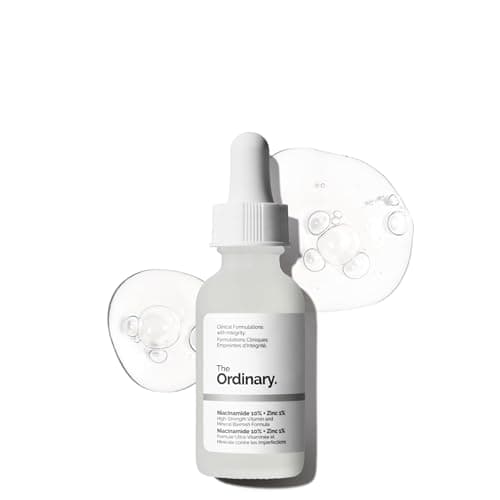
The Ordinary Niacinamide 10% + Zinc 1%
The Ordinary Niacinamide 10% + Zinc 1% Smoothing Serum
The reference budget serum: eleven ingredients, fragrance-free, at roughly $6/oz. What most people should buy first.
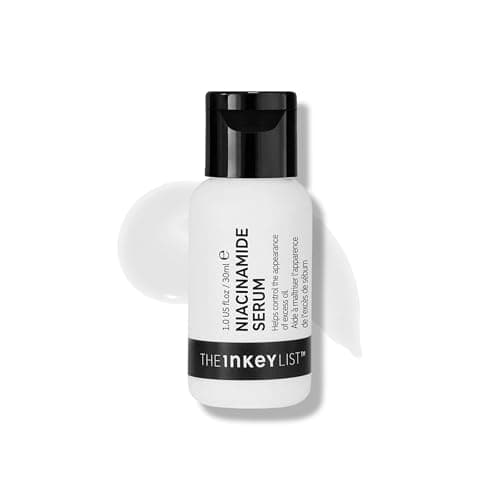
The INKEY List 10% Niacinamide + 1% HA
The INKEY List 10% Niacinamide Serum with 1% Hyaluronic Acid
The same 10%, but the added humectants offset the oil control — a better bet for skin that finds The Ordinary drying.
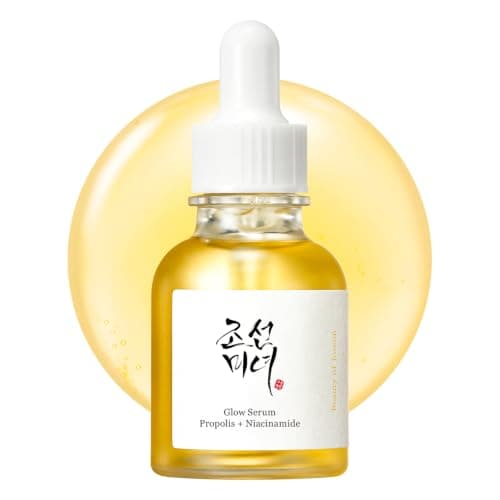
Beauty of Joseon Glow Serum
Beauty of Joseon Glow Serum (Propolis + 2% Niacinamide)
2% niacinamide — the exact concentration the barrier and sebum studies used — buffered in 60% propolis for reactive skin.
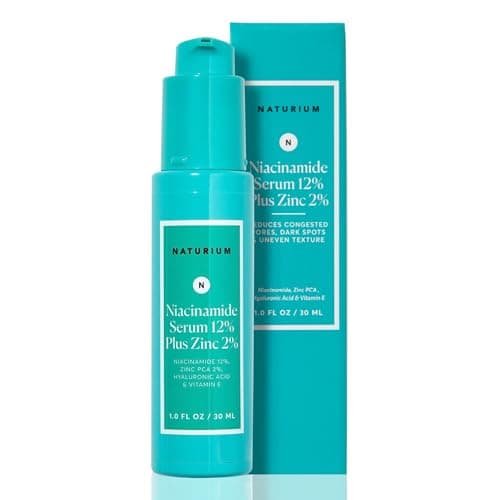
Naturium Niacinamide 12% + Zinc 2%
Naturium Niacinamide Face Serum 12% + Zinc 2%
Buy it for the supporting cast — double the zinc plus hyaluronic acid and glycerin — not for the 12% headline number.
The Ordinary Niacinamide 10% + Zinc 1%
Buy this if you want oil control for the price of a coffee and you are willing to work around its texture. It is the baseline every other serum here has to beat.
Eleven ingredients, fragrance-free, with niacinamide second on the INCI list and zinc PCA fourth. No hydration system at all — no hyaluronic acid, no panthenol, no squalane. That is the whole design, and it is why it costs what it costs.
Using it: the price is the argument and it delivers on it. Oil control was visible, and I thought my pores looked better by the end of the six weeks. Two things went against it. It pills, especially under makeup or sunscreen, and the texture is tackier than it looks — it takes longer to sink in than a serum this thin should. And I broke out a little.
On that last part, carefully. A breakout is not a purge. Purging is comedones being pushed out faster because something accelerated your cell turnover, which is what retinoids and hydroxy acids do. Increasing turnover is not among niacinamide's documented mechanisms — the reviews list ceramide synthesis, sebum regulation, melanosome transfer and anti-inflammatory action, and nothing about turnover. So whatever happened on my face, "it's purging, push through" is not the explanation, and it is the worst possible advice to act on. Irritation and the rest of the formula are the likelier candidates, and I cannot tell you which from one face.
What other people report: the three things that went wrong for me are the three most repeated complaints across the Amazon reviews and other retailer reviews: pilling under makeup or sunscreen, a tacky texture that takes longer to sink in than its thinness suggests, and breakouts in the first few weeks. The praise is the price, plus oil control and pore appearance at around four to six weeks. One reviewer offers a concrete candidate for the breakouts — isoceteth-20, a solubiliser that is in fact eighth on this INCI — as a pore-clogging suspect rather than purging. I am not going to tell you that is the cause. I am telling you it is a more useful hypothesis than the one everyone reaches for.
Honest caveat: with no humectants in the bottle, this can feel harsh on dry or reactive skin. The INKEY List below fixes exactly that for about twice the price per ounce, which is still cheap.
The INKEY List 10% Niacinamide + 1% HA
Buy this if The Ordinary left your skin feeling stripped. Same 10%, with the humectants that the cheaper bottle deliberately leaves out.
The same 10% niacinamide, plus 1% hyaluronic acid, panthenol, allantoin and squalane — humectants that offset the dryness the oil control brings. Fragrance-free.
Using it: it absorbs fast, which after The Ordinary was the thing I noticed first, and there is no fragrance. Comfortable to wear.
The white residue, and why it happens: it is real, and it has a technical explanation rather than being a formulation fault — the niacinamide is coming back out of solution and returning to powder. It shows up when the bottle has not been shaken, when you apply too much, or when you do not massage it in properly. All three are fixable, and knowing the cause is what makes them fixable.
Honest caveat: the packaging. The recurring complaint from other users is the dispenser — you cannot control how much comes out — and the cap gets grubby. Given that over-applying is one of the three causes of the residue above, a dispenser that encourages over-applying is not a trivial flaw.
What other people report: both of my complaints turn up repeatedly in the Amazon reviews and elsewhere: the white residue with the same technical explanation, and the dispenser, with one reviewer saying she has to clean the cap after every use. The 30ml bottle is reported to run out fast, and several people mention an oaty smell despite the lack of fragrance. The most useful pattern: a number of people whom The Ordinary broke out say this one did not. One caution when you go looking — most search results for "INKEY niacinamide" are about the brand's 20% Excess Oil Solution, a different product with far worse residue complaints. Do not read those as being about this bottle.
Beauty of Joseon Glow Serum
Buy this if your skin is reactive and you want the concentration the studies actually used — as long as you are not allergic to bee products and you wear sunscreen.
2% niacinamide, 60% propolis extract and 0.5% betaine salicylate. The 2% is the whole point: it is the concentration the barrier and sebum studies used, and this is the only serum on the page that sits inside the evidence rather than above it.
Using it: the glow is immediate and it is not subtle. It settled irritated skin down, it sat under makeup without pilling — the only one here that did — and it worked on my skin, which is reactive. The texture is thick, closer to honey than to a serum, which is the trade you make for the propolis.
Honest caveat: it contains a BHA, and the brand says so itself: "It contains 0.5% BHA, so be sure to apply sunscreen when using it during the day." That is a real condition attached to a product filed under gentle, and it belongs in the same sentence as the recommendation rather than three scrolls below it. Propolis is also a bee product — skip this entirely if you have a bee or honey allergy.
What other people report: this is the most warmly reviewed product on the page by a distance. The immediate glow comes up again and again in the Amazon reviews and on other retailers, along with it calming irritated skin and sitting well under makeup — including from people with sensitive and eczema-prone skin. The complaints are narrow: the 30ml bottle is small, several people say the brightening never really shows up even though the hydration does, and reviewers in humid climates report it staying tacky in a way the brand's own copy says it will not.
Naturium Niacinamide 12% + Zinc 2%
Buy this for the supporting cast and the packaging, not for the 12% — which is the part of it I would argue against.
Double the zinc PCA of most competitors, plus sodium hyaluronate, glycerin and propanediol. The most complete supporting formula in the category, at budget-tier pricing.
Using it: the texture is the best-judged of the six — smooth, not tacky at all, and it does not foam up on damp skin the way some zinc formulas do. It ships in a pump rather than a dropper, which protects the contents from air and light better and, unlike the INKEY dispenser, actually meters the dose.
Honest caveat: two. It pills under foundation. And the 12% is unnecessarily high — the evidence stabilises at 2–5% for barrier and tone and 4–6% for acne and sebum, so 12% is not twice as good as 6%, it is just further past the point where the data stops. Naturium's own instructions tell you to start with one or two drops and build tolerance, which is a fair description of a number chosen for the label rather than for your face.
What other people report: the most repeated piece of praise in the Amazon reviews is comparative: that it did not break people out when The Ordinary did. Texture and the pump come up positively, as they did for me. The pilling under foundation is widely confirmed, and one ingredient database attributes it to the dimethicone, which dissolves in neither water nor oil. Comedogenicity is genuinely split — some people report clogged pores. And the 12% draws criticism from the people using it, not just from me: one reviewer says she has nothing bad to say about the product except the concentration.
Worth it only for one specific job
These cost more, and that can be justified — but only because of a secondary active niacinamide can't replicate, not because of the niacinamide itself. Buy them for the job, not the label.
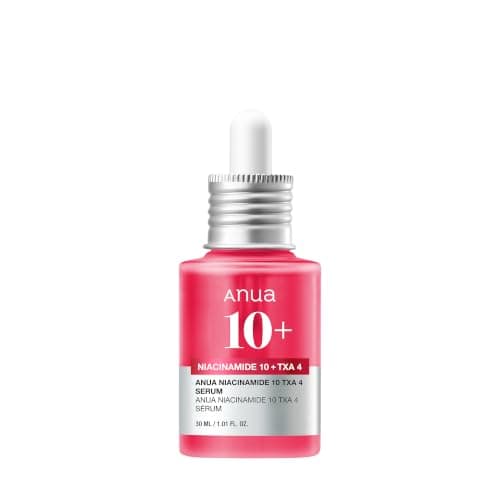
Anua Niacinamide 10 + TXA 4
Anua Niacinamide 10 + TXA 4 Dark Spot Serum
You're paying for four pigment actives besides the niacinamide — tranexamic acid, arbutin, alpha-arbutin and ethyl ascorbic acid.
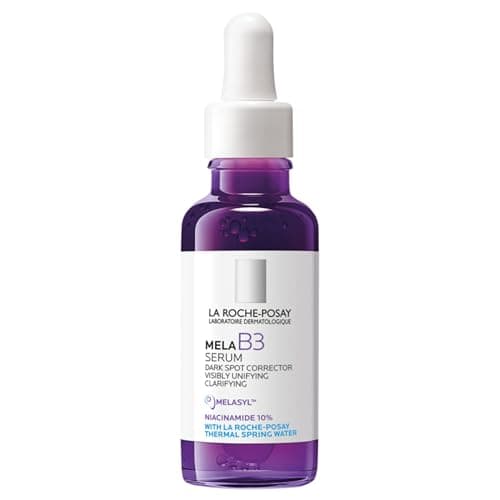
La Roche-Posay Mela B3
La Roche-Posay Mela B3 Dark Spot Serum with Melasyl
10% niacinamide plus Melasyl, a pigment pathway niacinamide can't replicate — the reach-for-the-pharmacy option for marks.
Anua Niacinamide 10 + TXA 4
Buy this for stubborn post-inflammatory marks, and understand that you are buying the tranexamic acid — the niacinamide is the cheapest thing in the bottle.
The pigment work here is not the niacinamide's. Reading the INCI, this formula carries four pigment actives besides it: tranexamic acid at a declared 4%, arbutin, alpha-arbutin and 3-O-ethyl ascorbic acid. Tranexamic acid blocks the pigment signal upstream while niacinamide blocks melanosome transfer, and stacking mechanisms is why this works on marks that a single active does not shift.
Using it: watery, absorbs fast, no fragrance. One bottle lasted me about two months, which matters when you are being asked to commit to eight to twelve weeks before you judge it.
Honest caveat: it can still feel tacky, and it pills under makeup if you apply a generous amount. It also runs to roughly fifty ingredients and needs daily SPF to do anything at all — without the sunscreen, do not bother. And note what the four-active list means for the price argument: you are paying a pigment-serum premium, so if marks are not your problem, none of this is worth the money.
What other people report: effectiveness on marks is well reviewed in the Amazon reviews and on other retailers. The texture divides people sharply — light to some, thick and slippery to others. The pilling is confirmed, and one reviewer offers the fix that matches my own experience exactly: it was the amount, and using half as much solved it completely. Against that, at least one person with closed comedones and post-inflammatory marks reports it made her congestion worse.
La Roche-Posay Mela B3
Buy this if you want the pharmacy option for marks and the fragrance is not a dealbreaker — it is the best-behaved texture here and the most expensive bottle on the page.
10% niacinamide plus Melasyl, a pigment-targeting molecule the brand spent eighteen years developing. La Roche-Posay's own study reports measurable improvement in dark-spot size, contrast and density in most subjects after eight weeks — it is the brand's study, which is worth knowing when you read the figure.
Using it: it absorbs quickly and, worn on its own, it did not pill on me at all.
Honest caveat: three things. The fragrance is strong — a strange trade in a serum aimed at reactive, mark-prone skin, and the same complaint I have made about this brand's anti-ageing line elsewhere. The dropper cakes up around the neck of the bottle. And while it does not pill by itself, it leaves a thin film that can pill once foundation goes over it. It is also roughly double the Anua for the same job.
And then there is what else is in it. Reading the full INCI rather than the marketing: alongside the niacinamide and the Melasyl, this contains capryloyl salicylic acid — an LHA, which is an exfoliant — plus retinyl palmitate, which is a retinoid ester, plus parfum and a colourant. That is three actives beyond the headline one, in a serum sold to reactive, mark-prone skin. It also has a specific consequence for the section below: niacinamide does not do what purging requires, but a retinoid ester and an exfoliating acid do. If this bottle breaks you out, the niacinamide is the least likely thing in it to be responsible.
What other people report: of everything here, this has the strongest efficacy reporting — concrete accounts in the Amazon reviews and elsewhere of melasma lightening, pregnancy marks fading and post-acne marks clearing, with one reviewer documenting results at nine weeks. All three of my complaints are corroborated, and the fragrance one comes back stronger than mine: one reviewer says she holds her breath to apply it. The dropper caking is common enough that people ask for a pump. Expect six to eight weeks before anything shows.
The ones to skip
None of these are bad products. That's exactly the point: a good formula delivering the same 10% as a $6 serum still isn't worth several times the price, and a bigger number past the proven dose isn't worth chasing at all.
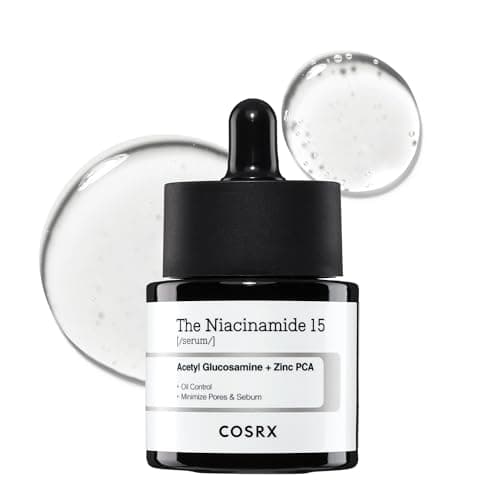
COSRX The Niacinamide 15
COSRX The Niacinamide 15 Serum
15% is well past where the clinical evidence stabilises, in a 0.67 oz bottle that makes it one of the priciest per ounce here.
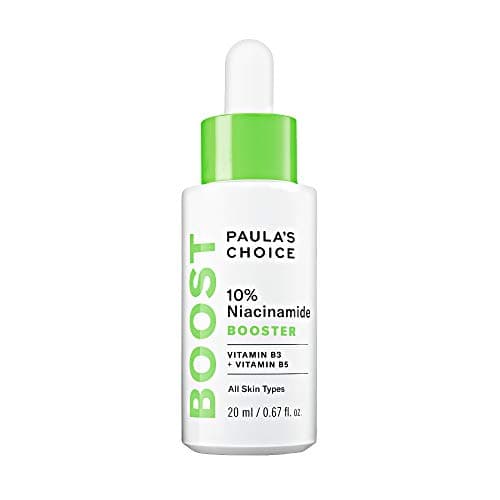
Paula's Choice BOOST 10% Niacinamide
Paula's Choice 10% Niacinamide Booster
A genuinely good formula that delivers the same 10% as a $6 serum at roughly ten times the price per ounce. Good does not make it ten times better.
COSRX The Niacinamide 15
Skip it. 15% is past the point where the evidence stops, in the smallest bottle on the page.
I did not use this one, so there is no account of wearing it here — only the arithmetic and the ingredient list. At 15% it sits well above where the clinical data stabilises, and the 0.67 oz bottle puts it among the most expensive things on this page per ounce despite a modest sticker price. If you have genuinely hit a ceiling at 10% and want more, the honest answer is that no published trial shows the extra five points buying you anything.
What other people report: the reviews make the argument better than I can. In the Amazon reviews and on other retailers, the split runs along tolerance rather than results: people arriving from a 10% serum mostly cope, while people starting here get stinging, flushing — a pink face for ten or fifteen minutes, worse on damp skin — and in one account a crop of closed comedones and inflammation after two nights. Even a reviewer used to 10% was caught out by the burn.
And here is the detail that settles it. There are people who dilute this — one or two drops mixed into their moisturiser — in order to tolerate it. That is the operational definition of a concentration higher than it needs to be: the fix is to make it weaker. To be fair to the product, the oil control and pore reporting is genuinely strong, the texture is watery and leaves no film, and the packaging protects against oxidation. It is not a bad formula. It is a number chosen to win a shelf.
Paula's Choice BOOST 10% Niacinamide
This is a genuinely good formula — a vitamin C derivative, licorice root, allantoin, and hyaluronic acid, and it's praised by dermatologists in Forbes. It also delivers the same 10% as a $6 serum at roughly $73/oz. Being good doesn't make it twelve times better; that's the whole argument.
The INKEY List SuperSolutions 20%
This is the skip that isn't about price — it's cheap. 20% is double a benchmark (10%) that is itself already double the proven dose. The objection here is evidence, not cost, and that contrast is the point: our criterion is what the research supports, not what your wallet can absorb. (It's also currently unavailable on Amazon, so we don't link it.)
Sunday Riley B3 Nice & Dr. Barbara Sturm The Better B
Sunday Riley's 10% serum runs roughly $46–65/oz and Dr. Barbara Sturm's 5% option about $160/oz (per Forbes Vetted). Neither offers a niacinamide concentration or a secondary active that a serum a fraction of the price can't match. You're paying for the jar and the name.
One reality check before you buy for oil
A niacinamide serum reduces visible shine and can make pores look smaller. It does not change how much oil your skin produces at the source — that output is set by genetics and androgens, not by a topical. If a serum promises to "stop" oil, it's overselling. We cover exactly what controls sebum in why your skin won't stop producing oil.
What every one of them had in common
Six serums, six weeks, and the same complaint kept turning up. Four of the six pilled on me: The Ordinary, Naturium, Anua, and La Roche-Posay once foundation went over it. The INKEY List did not pill but left a white residue, which is the same problem wearing a different coat — niacinamide coming back out of solution and returning to powder. Only the Beauty of Joseon, the 2% one, did neither.
That pattern held at every price point on this page, from the $6 bottle to the $45 one. Which is worth saying plainly: pilling is not a sign you bought the cheap one. It is what this ingredient does at high concentrations in a thin vehicle, and paying more does not buy you out of it.
What does help is technique — less product, let each layer dry, massage it in rather than patting it on. What also seems to help, on the evidence of the one serum here that gave me no trouble at all, is not reaching for the biggest number available. I am not going to claim six weeks on one face proves that. But it is the direction the studies point too, and it is the reason I keep coming back to the 2% bottle.
Two more patterns show up once you read the reviews across all seven rather than one at a time. The first: on the budget serums, the most repeated compliment is comparative — that it did not break someone out, unlike The Ordinary. That shows up for the INKEY List, for Naturium and for the COSRX. The Ordinary is the reference point the whole category is measured against, and its reputation for breaking people out is quietly doing the marketing for three of its competitors.
The second is the more useful one. Across all seven products, almost nobody complains that it did not work. They complain that it stung, that it pilled, that it smells, that the bottle is a disaster. That is a category where the ingredient is doing its job and the entire difference between products is formulation, packaging and how much of it they decided to put in. Which is the argument this page has been making from the top, arrived at from the other direction.
Is an expensive niacinamide serum ever worth it?
Only for two reasons. The first is a secondary active that niacinamide cannot replicate — tranexamic acid, arbutin, or Melasyl, which reach pigment through different pathways and are the reason the Anua and Mela B3 earn their higher price on stubborn marks. The second is a texture your skin actually tolerates, so you finish the bottle instead of abandoning it. Paying more for a bigger niacinamide number alone buys marketing, not measurable results.
Which niacinamide serum is best for oily, acne-prone skin?
The Ordinary Niacinamide 10% + Zinc 1% is the practical pick: the zinc PCA supports oil control and it costs about $6 an ounce, so there's little downside to trying it first. Set expectations, though — niacinamide reduces the look of shine and the visibility of pores, but it does not shrink how much oil your skin makes. Confused about how oily your skin actually is? The skin type quiz is a faster way to find out than guessing.
Can niacinamide irritate your skin?
It can, though it's well tolerated for most people at 2–10%. Genuine irritation tends to come from very high concentrations or, far more often, from stacking. Niacinamide now turns up in cleansers, toners, moisturizers, and sunscreens, so you may be layering several sources without realizing it — a common cause of "mystery irritation." If your skin is reacting, audit the whole routine before you blame one serum.
And it should not make you purge
This matters because "it's just purging, push through" is the advice that keeps people using something that is actively irritating them. Purging has a mechanism: an ingredient speeds up cell turnover, and comedones that were going to surface anyway surface all at once. Retinoids and hydroxy acids do that. It is the entire reason the word exists.
Accelerating turnover is not among niacinamide's documented mechanisms. The pharmacology reviews list ceramide synthesis, sebum regulation, inhibition of melanosome transfer, anti-inflammatory and antioxidant activity — and nothing that speeds up the rate at which your skin sheds. Which means the mechanism purging requires is absent.
I want to be precise about how strong that claim is. No study says "niacinamide does not cause purging", because nobody runs a trial to prove an absence. The argument is that the mechanism is missing from a well-characterised profile, not that it has been ruled out. But the practical conclusion holds either way: if you break out on a niacinamide serum, treat it as irritation or as a reaction to something else in the formula, and stop rather than push through. I broke out a little on The Ordinary, and pushing through would have been the wrong call.
How to actually choose
Do / Don't
Do
- Compare on price per ounce, not sticker price — a 0.67 oz dropper can quietly double the real cost.
- Start at 2–5% if your skin is reactive; that's where the evidence is anyway.
- Pay more only for a secondary active (tranexamic acid, arbutin, Melasyl) or a texture you'll actually use.
- Give any pigment-focused serum 8–12 weeks with daily SPF before judging it.
Don't
- Don't buy on the niacinamide number alone — 10%, 15%, and 20% aren't backed by head-to-head data over 5%.
- Don't assume tolerance means efficacy; a formula that doesn't sting isn't automatically doing more.
- Don't expect any serum to stop oil at the source — it reduces visible shine, not sebum output.
- Don't stack niacinamide from a serum, moisturizer, toner, and cleanser and then wonder why your skin is irritated.
Frequently Asked Questions
Can niacinamide cause purging?
It should not. Purging has a specific mechanism — an ingredient accelerates cell turnover, so comedones surface faster than they otherwise would. That is what retinoids and hydroxy acids do. Accelerating turnover is not among niacinamide's documented mechanisms: the pharmacology reviews describe ceramide synthesis, sebum regulation, inhibition of melanosome transfer, and anti-inflammatory activity, with nothing that speeds up shedding. No study states that niacinamide cannot cause purging, because nobody trials an absence — but the mechanism purging requires is missing. Practically: if you break out on a niacinamide serum, treat it as irritation or as a reaction to something else in the formula, and stop rather than push through.
What niacinamide percentage should you actually look for?
Look for 2% to 5%. That is where the peer-reviewed evidence sits: 2% reduces sebum and repairs the barrier, while 5% improves pigmentation, redness, and fine lines. 10% is an industry benchmark, not a clinical one — no published head-to-head trial shows 10% beats 5% on pores, oil, or dark spots. Above 10%, evidence thins and irritation reports rise.
Is an expensive niacinamide serum ever worth it?
Only for two reasons. First, a secondary active that niacinamide cannot replicate — tranexamic acid, arbutin, or Melasyl for stubborn pigment. Second, a texture or formula your skin tolerates well enough that you finish the bottle. Paying more for a higher niacinamide number alone buys marketing, not results. Above roughly $10 an ounce, you are paying for texture, extra actives, or brand.
Which niacinamide serum is best for oily, acne-prone skin?
The Ordinary Niacinamide 10% + Zinc 1% is the practical pick: the zinc PCA supports oil control and it costs about $6 an ounce. Be realistic about what it does — niacinamide reduces the look of shine and pore visibility, but it does not change how much oil your skin produces at the source, which is set by genetics and hormones.
Can niacinamide irritate your skin?
Yes, though it is well tolerated for most people at 2–10%. Irritation usually comes from very high concentrations or, more often, from stacking: niacinamide now appears in cleansers, toners, moisturizers, and sunscreens, so you may be using far more than one serum's worth. If you get mystery irritation, audit your whole routine rather than blaming a single product.
Final Thoughts
Niacinamide is one of the best-value actives in skincare, and the market has spent years obscuring that with bigger numbers on smaller bottles. Once you compare per ounce and look for what a formula adds beyond the niacinamide, most of the price spread disappears.
For most people, a serum in the $6–13/oz range is the whole answer, and anywhere from 2% to 10% will do the job — past 5%, the concentration on the label is a marketing number, not a better result. Spend more only when you're buying a pigment active niacinamide can't replicate, or a texture you'll genuinely stick with — and give it the weeks and the sunscreen it needs to work.
Disclaimer: This content is for informational purposes only and is not medical advice. Individual results may vary. Always patch test new products and consult a dermatologist for specific skin concerns.
Sources
- [1]Tanno O, Ota Y, Kitamura N, et al.. Nicotinamide increases biosynthesis of ceramides as well as other stratum corneum lipids to improve the epidermal permeability barrier. Br J Dermatol. 2000;143(3):524–531. (Barrier effect demonstrated at 2%.). View source
- [2]Wohlrab J, Kreft D. Niacinamide — mechanisms of action and its topical use in dermatology. Skin Pharmacol Physiol. 2014;27(6):311–315. (Mechanism review: ceramide synthesis, sebum regulation, melanosome transfer, anti-inflammatory action — no epidermal turnover acceleration.). View source
- [3]Beauty of Joseon. Glow Serum: Propolis + Niacinamide — product page. Brand states: "It contains 0.5% BHA, so be sure to apply sunscreen when using it during the day.". View source
- [4]INCIDecoder. Anua Niacinamide 10% + TXA 4% Dark Spot Correcting Serum — ingredient list (tranexamic acid, arbutin, alpha-arbutin and 3-O-ethyl ascorbic acid).. View source
- [5]Draelos ZD, Matsubara A, Smiles K. The effect of 2% niacinamide on facial sebum production. J Cosmet Laser Ther. 2006;8(2):96–101.. View source
- [6]Hakozaki T, Minwalla L, Zhuang J, et al.. The effect of niacinamide on reducing cutaneous pigmentation and suppression of melanosome transfer. Br J Dermatol. 2002;147(1):20–31.. View source
- [7]Hakozaki T, Bissett D, Boissy R, Greatens A. Niacinamide: reversibility of reduction of facial hyperpigmented spots (split-face, vehicle-controlled; 79 Japanese women; 2% and 5% arms; 8 weeks). J Am Acad Dermatol. 2005.. View source
- [8]Forbes Vetted. The Best Niacinamide Serums, Tested And Reviewed (per-ounce pricing reference).. View source
Keep Reading
Beginner Retinol Serums That Won't Wreck Your Barrier
The barrier damage beginners blame on retinol is mostly avoidable. Pick a starter retinol serum by delivery system and barrier support — not percentage.
How Long Retinol Really Takes (Week-by-Week Reality Check)
How long does retinol take? Texture shifts in weeks, fine lines need about 3 months, and pigment takes roughly 6 — here's the real week-by-week timeline.
Niacinamide vs Zinc: Do You Actually Need Both?
Niacinamide vs zinc: they're complementary, not competing — whether you need both depends on your skin concern, from oiliness to active inflamed acne.