Skincare Guide
Retinol for Beginners: How to Start Without Irritation
Retinol feels confusing because there's too much noise. This guide cuts through that noise: a practical, low-friction way to start retinol and actually stick with it.
Retinol feels confusing because there's too much noise. This guide cuts through that noise: a practical, low-friction way to start retinol and actually stick with it.
Quick Answer
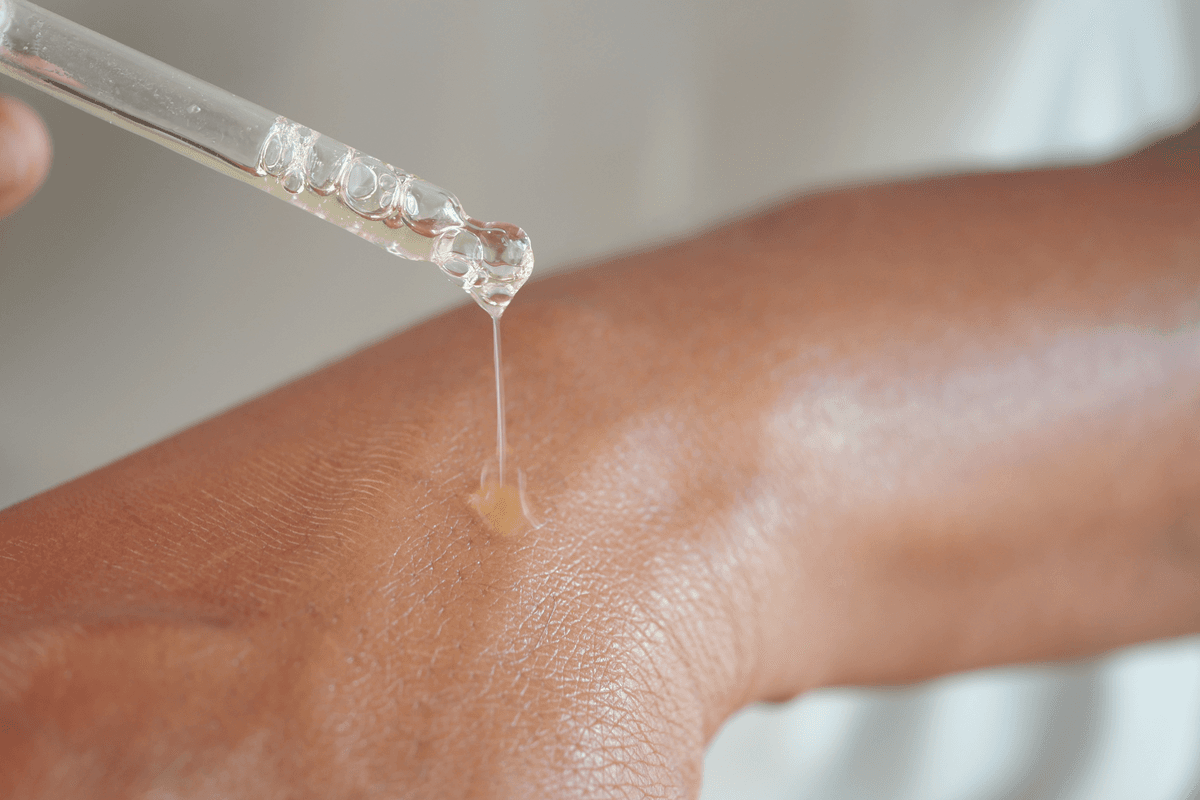
Bottom line: Start low, go slow — a pea-sized amount of 0.25–0.5% retinol on fully dry skin, two non-consecutive nights per week. Expect 2–4 weeks of mild dryness and flaking as your skin adjusts before things improve.
In this guide
Retinol is one of the most well-researched skincare ingredients available over the counter — the American Academy of Dermatology lists retinoids among the few ingredients with strong clinical evidence for anti-aging and acne benefits.[1] But for beginners, it feels mysterious—like you need a PhD in dermatology to use it without wrecking your skin.
The good news: you don't. Retinol is actually forgiving if you approach it calmly and respect your skin's timeline.
The problem isn't retinol. It's that most people start too strong, too fast, and in the wrong context. This guide walks you through a beginner approach that actually works.
Retinol works by speeding up your skin's cell turnover. New cells come to the surface faster, old cells shed more efficiently. Studies show that consistent use over 12 weeks or more leads to measurable improvements in texture, fine lines, and pigmentation.[2] The result: smoother texture, fewer breakouts, and over time, less visible signs of aging.
Here's what beginners notice first:
These changes take weeks to months, not days. Patience is part of the process.
There are too many choices and too much conflicting advice. Retinol, retinal, retinoic acid, tretinoin — which one do you pick? And people online say you'll either get perfect skin or destroy your barrier. Neither is true, but that noise paralyzes beginners before they even start.
The real issue: most guides assume you want to use retinol every night. You don't. Not yet. Starting slow is not “wasting” the ingredient — it's actually how you build lasting tolerance.
Retinol should never be your first skincare product. If you're new to all of this, first learn how to build a skincare routine from scratch and keep it stable for at least four weeks before coming back here.
Most beginners start with 2 nights per week. If your skin is sensitive or reactive, start with 1 night. Three things to get right from day one:
Editor's Pick for Beginners
If you don't have a retinol yet, we highly recommend the Neutrogena Rapid Wrinkle Repair Retinol or RoC Retinol Correxion. Both are gentle, effective, and perfect for first-timers.
1 night in Week 1, then 2 spaced nights in Week 2.
Week 1 — 1 Night Only
Week 2 — 2 Spaced Nights
If you have sensitive or reactive skin, the "sandwich method" is often the simplest way to begin. Instead of applying retinol directly to clean skin, you buffer it with moisturizer on both sides.
Light Moisturizer → Retinol → Rich Moisturizer
Applying a thin layer of moisturizer before your retinol slows down its absorption, significantly reducing the chance of redness or peeling without stopping it from working.
Frequency matters more than strength. Here's how to progress safely:
Sensitive skin: start with 1 night in week one, then increase to 2 non-consecutive nights in week two only if your skin stayed comfortable. Average tolerance: 2 nights per week from the start. Your skin is learning—mild dryness is normal adjustment, not damage.
Stay consistent at 2 nights. This is your baseline. Keep recovery nights simple: gentle cleanser and moisturizer only. Don't rush the next step.
Only increase if your skin has been consistently comfortable. If you're still experiencing dryness or sensitivity, stay at 2 nights. There's no benefit to rushing this step.
Some people eventually reach 3–4 nights. Nightly use is not necessary for most people. The goal is consistency, not maximum frequency. Your skin will tell you when it's ready—and when it isn't.
The key rule: If your skin is irritated, reduce frequency. Don't increase strength. Most beginners make the mistake of switching to a "stronger" retinol when they should just be using their current one less often.
This is critical to understand. Not all redness or dryness means retinol is wrong for you.
This is your skin adapting. Keep going.
This means slow down or pause. See next section.
Irritation is feedback, not failure. Your skin is telling you to adjust, not to quit.
If you're using retinol 3 nights per week, drop to 2. If that still feels too much, go to 1 night per week. This is not wasting time—you're teaching your skin to tolerate it.
Remove all actives. No vitamin C, no acids, no additional serums. On the nights you skip retinol, your routine should be incredibly boring: gentle cleanser → barrier-repair moisturizer. Your skin's only job right now is healing.
Double down on hydration. A rich, barrier-supporting moisturizer is your retinol partner. Apply while skin is still damp to lock in water.
Take a 1–2 week break. Let your skin recover. Then restart at 1 night per week, very slowly building back up. This "reset" often works.
Worth noting: Almost everyone experiences some irritation when starting retinol — it's called the retinization period and it's expected. It doesn't mean your skin is broken or that retinol isn't for you. Adjust frequency, not strength.
Begin with a low-strength retinol or retinyl palmitate. You don't need tretinoin as a beginner.
Your skin needs time to adapt. Starting at 1–2 nights per week and building slowly is how tolerance actually forms.
Retinol + AHAs + vitamin C + benzoyl peroxide = overwhelmed skin. Keep it simple while your skin learns.
Retinol works on a 6–12 week timeline. Patience is the secret ingredient most people skip.
Most people quit during the adjustment period because they think retinol isn't for them. Stick with it for at least 4–6 weeks.
Your routine should support retinol, not compete with it. Keep it minimal.
Step 1: Cleanse
Gentle cleanser. Remove the day.
Step 2: Apply retinol
Pea-sized amount. Wait 20 minutes if your skin is sensitive (optional but helpful at first).
Step 3: Moisturize
Apply a rich, barrier-supporting moisturizer (like La Roche-Posay Cicaplast or Vanicream). Apply to damp skin to lock in water.
Step 1: Cleanse
Same gentle cleanser.
Step 2: Moisturize
Same moisturizer.
Optional: Light serum
Hyaluronic acid or a lightweight hydrating serum if your skin feels dry.
Retinol encourages new, fresh skin cells to come to the surface. These new cells are highly sensitive to UV rays. Daily SPF 30+ is mandatory. If you aren't going to wear sunscreen every single morning, do not start using retinol.
Here's a truth nobody says: you probably don't need to upgrade.
Once your skin builds tolerance to a beginner retinol, most people do fine staying there. You don't need to move to a "stronger" retinol just because you can.
Only consider upgrading if:
Even then, don't jump to prescription retinoids. Try a mid-strength retinol first. Progression is optional, not required.
Pick any low-strength retinol (retinyl palmitate, retinol, or retinal). Start with 2 nights per week. That's your foundation. Nothing fancy needed.
Start with 1 night in week one. If your skin stays comfortable, increase to 2 non-consecutive nights in week two. Use the sandwich method. Build tolerance gradually over 8–12 weeks. Skip the "stronger" products.
You probably used it wrong (too often, too strong, or in a complicated routine). Go back to basics: 2 nights per week, pea-sized, paired with a good moisturizer. Your skin might be ready now.
Choose the lowest-friction option: a simple retinol, used 2 nights per week, in a minimal routine. Overthinking here is the enemy. Start now.
If
you are a complete beginner with no retinoid history
Start with 0.25–0.5% retinol, 2× weekly
Because: higher concentrations produce irritation before tolerance exists to manage it; frequency is the variable to build, not concentration
If
you have sensitive or rosacea-prone skin
Start with 0.1–0.25% retinol, 1× weekly, using the sandwich method
Because: your inflammatory response threshold is lower; slow buildup prevents the irritation that causes most sensitive-skin beginners to abandon the ingredient
If
you previously tried retinol and quit due to irritation
Restart at 0.25% once weekly — not the concentration you stopped at
Because: your skin did not build sufficient baseline tolerance the first time; restarting lower re-establishes enzyme capacity without replicating the same outcome
If
you have oily or acne-prone skin
Use 0.5% retinol 2× weekly from the start
Because: sebaceous activity tends to buffer the retinization period; oily skin types generally tolerate the adjustment phase more easily than dry or sensitive types
If
you want results faster than retinol provides after 3–6 stable months
Switch to retinal 0.05–0.1%
Because: retinal's single-step conversion to retinoic acid produces visible improvement 4–6 weeks faster once your skin has the tolerance base retinol builds
Most beginners debate concentration when they should be debating application method. The sandwich method and direct application produce meaningfully different irritation profiles — choosing the right method for your skin type matters more than starting at 0.25% vs 0.5%.
| Factor | Sandwich Method | Direct Application |
|---|---|---|
| Irritation risk | Lower — moisturizer slows penetration | Higher — full penetration rate |
| Speed of results | Slightly slower | Faster |
| Best for | Weeks 1–4, sensitive or reactive skin | After 4+ weeks of established tolerance |
| Long-term outcome | Equivalent — same ingredient, slower uptake | Equivalent — same ingredient, faster uptake |
Retinol isn't complicated. The hype and conflicting advice make it feel that way. Your job is simple: start low, go slow, stay consistent.
You don't need the fanciest retinol or the most complex routine. You need patience, a basic moisturizer, and trust that your skin adapts.
Irritation will happen—that's part of building tolerance. Adjust frequency, not strength. Most people succeed not by using stronger retinol, but by using their current retinol smarter.
Start now. Keep it simple. Be patient. Your skin will thank you.
Keep Reading
Beginner Retinol Serums That Won't Wreck Your Barrier
The barrier damage beginners blame on retinol is mostly avoidable. Pick a starter retinol serum by delivery system and barrier support — not percentage.

How Long Retinol Really Takes (Week-by-Week Reality Check)
How long does retinol take? Texture shifts in weeks, fine lines need about 3 months, and pigment takes roughly 6 — here's the real week-by-week timeline.
The Niacinamide Serums Worth Buying (and the Overpriced Ones to Skip)
The best niacinamide serum for most people costs under $10 — the clinical evidence tops out at 5%, not 10%. Here's what's worth buying and which to skip.