Ingredients
How to Decide Between Retinol vs Retinal
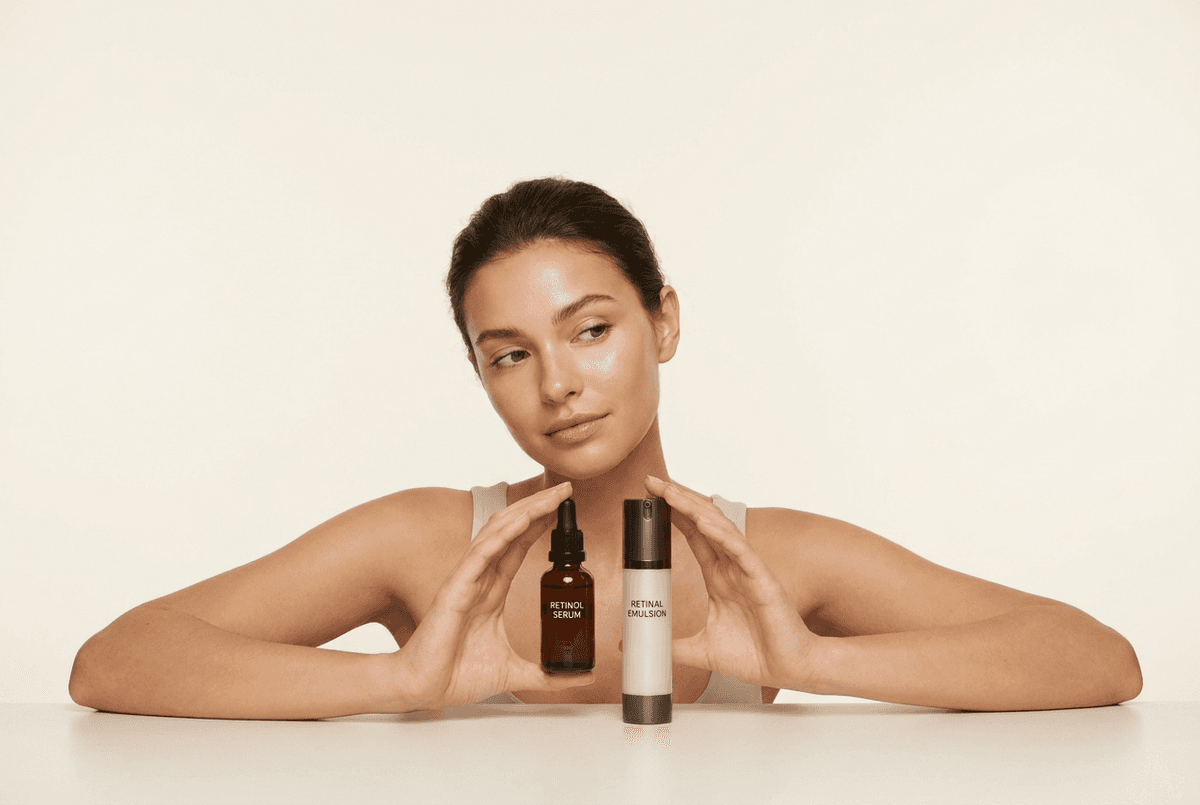
Both retinol and retinal work—but one is significantly faster. This guide explains the difference and helps you choose the right one for your skin.
Both retinol and retinal work—but one is significantly faster. This guide explains the difference and helps you choose the right one for your skin.
Quick Answer
Bottom line: If you've never used a retinoid, start with retinol — it converts more slowly to retinoic acid, which means less irritation risk. Retinal is more potent and faster-acting, but it's a step up, not a starting point.
In this guide
Retinol and retinal are both vitamin A derivatives (retinoids) that accelerate cell turnover to improve skin texture, reduce acne, and address visible aging. Retinal sits one enzymatic conversion step closer to retinoic acid than retinol — this makes retinal faster-acting, but proportionally more likely to cause irritation in users without prior retinoid tolerance.
If you've spent any time comparing retinoid options, you've probably noticed that retinol and retinal often appear side by side. Both promise smoother texture, clearer skin, and fewer fine lines. Both are popular. But which one is actually right for you?
The short answer: it depends on your experience level and tolerance. But there's more nuance worth understanding, because choosing the wrong one can mean irritation, frustration, or wasted money.
This guide walks you through how retinol and retinal work, their key differences, and how to pick the one that fits your skin right now.
Retinol is a form of vitamin A (retinoid) that your skin must convert into retinoic acid before it can actually work. Think of retinol as the gentlest introduction to retinoids—it takes time to convert, which means slower, milder results but also less immediate irritation.
Here's the conversion pathway: retinol → retinal → retinoic acid.[1] Your skin has to convert retinol through two steps, which is why results appear gradually. For most people, you'll notice visible changes after 8–12 weeks of consistent use.
Because of this gentle conversion process, retinol is less likely to trigger irritation, redness, or peeling—especially compared to prescription-strength retinoids. The AAD notes that OTC retinoids, while slower acting, are appropriate for most people as a first-line retinoid option.[1]
Retinal is closer to retinoic acid in the conversion chain. Instead of requiring two steps like retinol, retinal only needs one: retinal → retinoic acid. This single-step conversion makes it faster and more potent than retinol, while still being gentler than prescription retinoids like tretinoin.
Because it skips a conversion step, retinal gets to work more efficiently. Many people see visible improvements in 4–8 weeks, rather than 8–12. But this efficiency comes with a trade-off: higher irritation potential, especially if your skin isn't ready for it.
Retinal is best reserved for people who have already used retinol successfully or have experience with other retinoids. If you introduce retinal too early, you're more likely to experience peeling, redness, and dryness that might discourage you from using it.
| Criteria | Retinol | Retinal |
|---|---|---|
| Conversion steps | 2 steps | 1 step |
| Potency | Mild to moderate | Moderate to strong |
| Irritation potential | Lower | Moderate to higher |
| Speed of results | 8–12 weeks | 4–8 weeks |
| Availability | Over-the-counter | Over-the-counter |
| Price range | $8–$40 | $20–$80 |
| Best for | Beginners, sensitive skin | Experienced users, faster results |
You've never used a retinoid before
Your skin is sensitive or reactive
You want a lower-risk introduction to retinoids
You have a limited budget
You prefer a gradual approach to skincare changes
You're currently using other active ingredients like vitamin C or niacinamide
You've successfully used retinol for at least 3–6 months
You want faster, more noticeable results
Your skin has built up tolerance to gentler retinoids
You're not easily irritated by active ingredients
You're willing to manage potential peeling or dryness
You want a stronger option but prefer to avoid prescription retinoids
Technically, yes—but there's no real benefit. Using both retinol and retinal together would increase irritation without multiplying results. Your skin can only use so much retinoid at once; the extra retinoid doesn't boost effectiveness, it just increases the risk of sensitivity.
A better approach: pick one and use it consistently for at least 3–6 months. Once your skin is fully adapted and you've achieved your goals, you could consider switching to the other retinoid if you want to try something different. But there's no need to use both simultaneously.
A no-frills, affordable retinol option. Simple formula with retinol in squalane. No extras, no confusion. Good for beginners and budget-conscious shoppers. Check price on Amazon.
Best for: Beginners, budget-conscious, straightforward routine
Retinol paired with ceramides and hyaluronic acid for added comfort. Dermatologist-developed. Fewer irritation complaints than pure retinol because of the supporting ingredients. Check price on Amazon.
Best for: Barrier protection, sensitive skin, first retinoid experience
Mid-range retinol with antioxidants and botanical extracts. Higher price point but includes supporting skin-calming ingredients. Good if you want something more luxe. Check price on Amazon.
Best for: Premium feel, additional antioxidant support, consistent users
Gold-standard retinal serum. Professional-grade formula, stable, consistent results. Pricier but known for rapid visible improvements. Popular with dermatologists. Check price on Amazon.
Best for: Experienced users, investment in proven results
Accessible retinal option from a trusted drugstore brand. Includes peptides and hyaluronic acid. Good balance between potency and price. Check price on Amazon.
Best for: Budget-friendly retinal, drugstore availability, peptide support
Mid-range retinal with supporting ceramides and green tea. Less harsh than clinical formulas but more active than beginner retinols. Good stepping stone. Check price on Amazon.
Best for: Stepping up from retinol, supportive formula, mid-range price
Affiliate Disclosure: As an Amazon Associate I earn from qualifying purchases. This means we may earn a small commission if you purchase through our links, at no extra cost to you. This helps us continue creating helpful content.
If
you have never used a retinoid before
Start with retinol 0.25–0.5%, 2× weekly
Because: skin needs to develop enzymatic tolerance before it can efficiently process retinal's faster conversion rate
If
you've used retinol for 3–6 months without persistent irritation
Switch to retinal 0.05–0.1%
Because: retinal's single-step conversion produces visible texture improvement 4–6 weeks faster once baseline tolerance is established
If
you have rosacea or chronically reactive skin
Stay on retinol 0.25% at 1–2× weekly
Because: retinal's higher potency risks triggering inflammatory flares; retinol's slower conversion rate provides a safer, lower-stimulus option
If
you want prescription-grade speed without a prescription
Use retinal at 0.1%
Because: retinal is the closest OTC equivalent to tretinoin, with the same single-step conversion but significantly lower dryness risk at standard OTC concentrations
If
budget is the primary constraint
Use retinol — $8–$40 vs $20–$80 for retinal
Because: retinol delivers equivalent long-term results at 60–80% lower cost; the only tradeoff is 4–6 additional weeks to see peak improvement
Retinol and retinal are not interchangeable — they sit at different points on the same speed/irritation curve. Choosing the wrong one for your current tolerance level means either wasting 4–6 weeks waiting for results or experiencing enough irritation to abandon the ingredient entirely.
| Factor | Retinol | Retinal |
|---|---|---|
| Conversion steps | 2 (retinol → retinal → retinoic acid) | 1 (retinal → retinoic acid) |
| Relative potency | Baseline | ~11× more bioavailable |
| Visible results timeline | 8–12 weeks | 4–8 weeks |
| Irritation risk | Lower — suitable for new users | Moderate — requires prior tolerance |
| Typical price range | $8–$40 | $20–$80 |
| Who should use it | No retinoid history, sensitive skin, budget-conscious | 3–6 months stable retinol use, faster results needed |
Choosing between retinol and retinal isn't about finding the "better" one—it's about finding the right one for where your skin is now.
If you've never used a retinoid, retinol is your starting point. It's proven, affordable, and gentle enough to build tolerance. Give it a solid 3–6 months. You'll see improvement, and your skin will adapt.
Once you're comfortable with retinol and want to step up, retinal is waiting. It delivers faster results, but only if your skin is ready for it.
The best retinoid is the one you'll actually use consistently. Pick one, commit to it for at least 12 weeks, use it with moisturizer and sunscreen, and trust the process. Your skin will thank you.
Keep Reading
Beginner Retinol Serums That Won't Wreck Your Barrier
The barrier damage beginners blame on retinol is mostly avoidable. Pick a starter retinol serum by delivery system and barrier support — not percentage.
How Long Retinol Really Takes (Week-by-Week Reality Check)
How long does retinol take? Texture shifts in weeks, fine lines need about 3 months, and pigment takes roughly 6 — here's the real week-by-week timeline.
The Niacinamide Serums Worth Buying (and the Overpriced Ones to Skip)
The best niacinamide serum for most people costs under $10 — the clinical evidence tops out at 5%, not 10%. Here's what's worth buying and which to skip.