5 Skincare Ingredients You Should Never Wear in the Sun (And the One Everyone Gets Wrong)
Three different problems hide behind one warning label — and only one of them can actually hurt your skin. The other two are solved by sunscreen, or by nothing at all.
Bottom line: Only one category of skincare ingredient genuinely needs daytime avoidance: cold-pressed citrus and bergamot oils, which contain furocoumarins that react with UV to burn skin. AHAs, hydroquinone, and benzoyl peroxide raise UV vulnerability but are fine by day under sunscreen. Retinoids belong at night to protect the product, not your face. Vitamin C is not sun-sensitizing at all.
Phototoxicity is the only true 'avoid in daylight' category — cold-pressed citrus and bergamot oils contain furocoumarins that react with UV to cause burning, blistering, and streaky hyperpigmentation
AHAs, hydroquinone, and benzoyl peroxide raise UV vulnerability or are undermined by sun exposure — the fix is broad-spectrum SPF 30+, not avoidance
Retinoids and vitamin C are photo-unstable, not photo-sensitizing: UV degrades the ingredient, which costs you efficacy rather than damaging your skin
"Never wear this in the sun" is not one warning. It is three completely different problems wearing the same label. One ingredient category reacts with UV light to chemically burn your skin. Another quietly strips the defenses your skin already had, so ordinary daylight does more damage than it otherwise would. A third does nothing to your skin at all — UV simply breaks the molecule down, and you lose the product you paid for.
Those three problems need three different responses, and lumping them together is how a genuinely useful safety rule turned into folklore. Here is which ingredients truly need daytime avoidance, which ones just need sunscreen, and the one everyone gets wrong.
Key Takeaways
Only cold-pressed citrus and bergamot oils are genuinely phototoxic — they are the one category that belongs off your face in daylight
AHAs (glycolic, lactic) raise UV sensitivity by thinning the outer dead-cell layer; the answer is sunscreen, not avoidance
Retinoids are photolabile: UVA degrades them, so night use protects the product's potency rather than your skin
Hydroquinone and benzoyl peroxide both work against sun exposure — one is undermined by it, the other degrades under UV and heat
Vitamin C is photo-unstable but not photo-sensitizing, and belongs in your AM routine under SPF
Three Different Problems, Not One
Before naming a single ingredient, it is worth separating the three mechanisms — because the mechanism, not the ingredient, tells you what to do about it.
1. Phototoxicity — the ingredient and UV damage your skin
Certain molecules absorb UV energy and turn it into a chemical reaction on your skin. The result is real injury: redness, burning, blistering, and hyperpigmentation that can linger for months. This is the only category where the correct answer is genuine daytime avoidance, because no amount of sunscreen makes the reaction acceptable.
2. Increased UV vulnerability — your defenses are thinner
Some ingredients don't react with UV at all. They remove or thin part of the skin's physical defenses, so the same amount of daylight does more damage than it used to. Nothing about the ingredient is dangerous in sunlight — the fix is replacing the protection you removed. That means sunscreen, not avoidance.
3. Photo-instability — UV destroys the ingredient
Here the damage runs the other way: UV breaks down the active molecule so it stops working. Your skin is unaffected; your results are. When dermatologists say "use it at night," this is usually what they mean — it is an efficacy instruction, not a safety warning. Confusing the two is where most sun-and-skincare folklore comes from.
Keep these three straight and the rest of this article is mostly bookkeeping. One category earns real avoidance. One category earns sunscreen. One category earns a nightly slot on your shelf and nothing more dramatic than that.
The 5 Ingredients
Each of these five carries a "not in the sun" reputation. Only the first one earns it in the way people assume.
Phototoxicity — genuine daytime avoidance
1. Cold-Pressed Citrus & Bergamot Oils
This is the one genuine "avoid in daylight" entry on the list. Cold-pressed citrus oils contain furocoumarins — compounds including bergapten (5-MOP) and other psoralens — that absorb UV and trigger a phototoxic reaction on skin. The clinical name is phytophotodermatitis, and it looks like redness, burning, and blistering, often healing into the streaky, drip-shaped hyperpigmentation that traces exactly where the oil ran.
Bergamot is among the highest-furocoumarin citrus oils, which is why it shows up in this conversation more than any other. The important nuance is that not all citrus oil carries the risk: steam-distilled versions and FCF (furocoumarin-free, or bergapten-free) grades largely avoid the problem, and rinse-off products washed off before sun exposure generally don't trigger it either.
Do / Don't
Do
Check for 'FCF', 'bergapten-free', or 'steam-distilled' on citrus-oil-containing products you leave on your skin
Keep cold-pressed citrus oils to evening use, or to rinse-off products only
Don't
Don't assume sunscreen makes a cold-pressed bergamot oil safe for daytime — this is the one case where avoidance is the actual answer
Don't apply undiluted citrus essential oils to skin you plan to expose to daylight
Increased UV vulnerability — wear SPF
2. AHAs (Glycolic, Lactic Acid)
AHAs are the most commonly misunderstood entry, because the warning is real but the response is wrong. Glycolic and lactic acid don't react with UV. They thin the outer layer of dead cells — a layer that was providing a small amount of physical shielding — so ordinary daylight reaches living skin more easily.
The evidence is specific. Studies co-sponsored by the CTFA and FDA found that topical AHA use raised UV sensitivity by up to roughly 18% after four weeks, and roughly doubled sensitivity to UV-induced cellular damage. On the strength of that, FDA guidance issued in 2005 recommends a "Sunburn Alert" label on AHA products. FDA and CIR safe-use parameters are concentrations of 10% or less, a pH of 3.5 or above, and use alongside sun protection.
Read that last clause carefully: the official guidance says use sun protection, not stop using AHAs. This is also where the acids conversation gets flattened — BHA (salicylic acid) does not behave this way, which is worth understanding if you're choosing between AHA and BHA exfoliants. The AHA warning is a sunscreen instruction that got mistaken for a curfew.
Photo-instability + irritation — night is about efficacy
3. Retinoids (Retinol, Tretinoin)
Retinoids are photolabile: UV degrades them, with UVA identified as the main driver of tretinoin and isotretinoin photodegradation. The dermatology consensus on evening application follows directly from that — apply it at night and the molecule survives long enough to do its job. Apply it at noon and you are mostly funding its destruction.
Retinoids do also cause mild barrier disruption and irritation, which can leave skin feeling more reactive and looking pink. That is worth managing with sunscreen and a slow ramp-up. But it is not a phototoxic burn, and retinol is not going to cook your face in daylight. If you are starting out, the pacing advice in our retinol guide for beginners matters more than the time of day.
The distinction that matters: "use retinol at night" protects your retinol. It does not protect you from retinol. Those are different claims, and only one of them is true.
Which raises the obvious follow-up: if retinol does not make you burn, why do dermatologists still treat sunscreen as non-negotiable alongside it? The answer has nothing to do with sensitivity and everything to do with what UV does to collagen — we cover why sunscreen still isn't optional with retinol in full, including whether you need to stop for summer.
Defeats its own purpose — SPF strongly advised
4. Hydroquinone
Hydroquinone is prescription-only in the United States and is not permitted in cosmetics, so most readers will encounter it through a dermatologist rather than a shelf. Its problem with sunlight is less dramatic than phototoxicity and more self-defeating: hydroquinone exists to lighten pigmentation, and sun exposure drives the pigmentation right back. Using it without sun protection is paying to run in place.
There is a second, more serious reason to take the sunscreen advice seriously. Exogenous ochronosis — a bluish-black hyperpigmentation — can develop after long-term or high-concentration hydroquinone use, and it appears preferentially in chronically sun-exposed skin. Sun protection is strongly advised for anyone using it.
Mild phototoxicity + degradation — best at night, plus SPF
5. Benzoyl Peroxide
Benzoyl peroxide straddles two of our three categories. The dryness it causes brings a mild increase in sun sensitivity, and photopatch studies by Civatte and colleagues in 1983 found erythema and phototoxicity under UVB in a meaningful share of subjects — roughly 33% at a 5% concentration and roughly 44% at 10%. That is real, though it sits well short of the furocoumarin reaction.
The newer concern is about the product rather than your skin. A study published online in October 2024 in the Journal of Investigative Dermatology found that many benzoyl peroxide products degrade into benzene — a carcinogen — at room temperature, and far more so under heat. Early evidence suggests UV and sunlight accelerate that process further, though the authors frame it as warranting more investigation rather than settled. Practical implication: night application plus daily sunscreen, and store the tube somewhere cool and dark rather than a hot, sunlit bathroom window.
The Myth to Drop: Vitamin C
Vitamin C is the ingredient everyone gets wrong, and the error is a single word. Vitamin C is photo-unstable. It is not photo-sensitizing. Those sound alike and mean opposite things for your routine.
Photo-unstable means UV degrades L-ascorbic acid itself — it oxidizes, loses potency, and turns yellow or brown in the bottle. That is a formulation and storage problem. Photo-sensitizing would mean vitamin C raises your skin's sensitivity to UV, and it does not do that. There is no burn, no reaction, no increased vulnerability.
In fact, the direction of effect runs the other way: vitamin C is an antioxidant that provides photoprotection. It belongs in your AM routine, layered under sunscreen, where it complements SPF rather than competing with it. It is not a sunscreen substitute — no antioxidant is — but daytime is exactly where it earns its place.
This is the same confusion that mislabels retinol as a sun hazard. In both cases UV degrades the ingredient, and in both cases the folklore upgraded "the product stops working" into "the product hurts you." If you're working out how the two fit together, our guide on using vitamin C with retinol covers the layering question directly.
So… Avoid It, or Just Wear SPF?
Almost every ingredient in this article resolves to "wear sunscreen." Exactly one resolves to "not in daylight." Here is the whole list sorted by what you actually do about it.
Furocoumarins absorb UV and trigger a reaction on your skin
Defenses are thinned, or sun undoes the ingredient's purpose
UV degrades the molecule so it stops working
Cost of ignoring: burning, blistering, streaky hyperpigmentation
Cost of ignoring: more UV damage, worse pigmentation
Cost of ignoring: wasted product, no skin injury
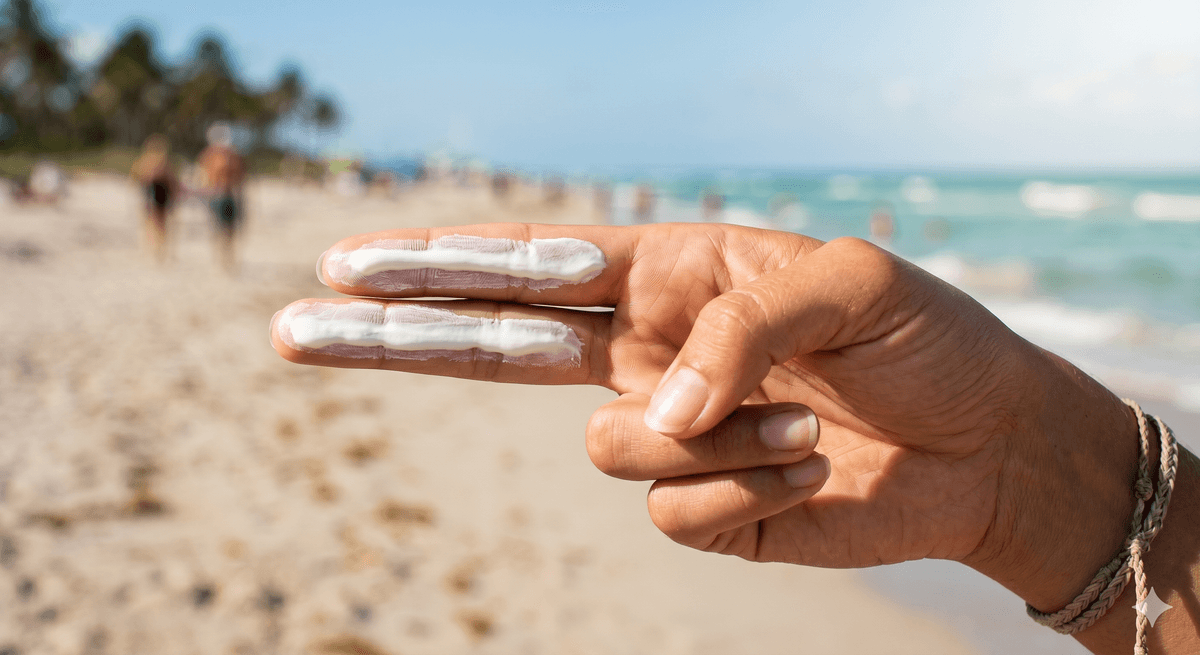
Notice where every column lands. Avoid the one phototoxic category, and the entire remaining list is managed by the same single habit: broad-spectrum SPF 30 or higher, applied daily and in a real quantity. Most people apply far less than the tested amount, which quietly downgrades whatever number is on the bottle — our guide on how much sunscreen to apply to your face covers what that actually looks like.
If you're not sure which formula suits you, our sunscreen picks are organized by skin type, and the skin type quiz takes about a minute if you want a starting point. Every path in the table above ends at the same place.
Frequently Asked Questions
Does vitamin C make my skin sun-sensitive?
No. Vitamin C is photo-unstable, not photo-sensitizing — two different things. UV degrades L-ascorbic acid itself, so the serum loses potency and can turn yellow or brown, but vitamin C does not raise your skin's sensitivity to UV. It is an antioxidant that provides some photoprotection, which is why it belongs in the AM routine underneath sunscreen. It is not a sunscreen substitute.
Can I use acids in summer?
Yes, with sunscreen — but don't lump all acids together. AHAs like glycolic and lactic acid do raise UV sensitivity, which is why the FDA recommends a 'Sunburn Alert' label on AHA products and advises daily sun protection. BHA (salicylic acid) does not increase sun sensitivity the way AHAs do, and some evidence suggests it may mildly inhibit UVB-induced sunburn-cell formation. Wear broad-spectrum SPF 30+ either way.
Will retinol burn my skin in the sun?
No. Retinoids are photolabile, meaning UVA degrades the molecule so it stops working — that is a loss of efficacy, not a phototoxic burn. Retinoids can cause mild barrier disruption and irritation, which makes skin feel more reactive, but they do not create a burning reaction with UV. The dermatology consensus on evening application exists to preserve the product's potency.
Is niacinamide a problem in the sun?
No. Niacinamide is photostable and not photosensitizing. Human data show it reduces UV-induced immunosuppression and DNA damage, which makes it a photoprotective adjunct rather than a risk. It is fine to use in the morning, and it pairs well with sunscreen.
Final Thoughts
The reason "never wear this in the sun" became so sticky is that it compresses three unrelated ideas into one memorable rule. Compression is useful right up until it costs you a good ingredient — and it has cost a lot of people their vitamin C serum.
A more accurate instinct: when you hear an ingredient is a sun problem, ask which direction the damage runs. If UV plus the ingredient hurts your skin, that is phototoxicity and it deserves avoidance. If the ingredient leaves your skin more exposed, that is a sunscreen job. If UV just breaks the molecule, your skin was never in the conversation.
Only one of the five ingredients here belongs in the first bucket. Meanwhile, ingredients like niacinamide are photostable and, on the human data, mildly photoprotective — the sun-safety conversation should probably be pointing at them more often than it warns you off vitamin C.
Sources
[1]U.S. Food & Drug Administration. Alpha Hydroxy Acids — guidance on sun sensitivity and 'Sunburn Alert' labeling. View source
[2]U.S. Food & Drug Administration. FDA works to protect consumers from potentially harmful OTC skin lightening products. View source
[3]American Academy of Dermatology. Sunscreen FAQs — broad-spectrum SPF 30+ and daily use. View source
[4]Journal of Investigative Dermatology. Kucera K, Zenzola N, Hudspeth A, et al. Evaluation of Benzene Presence and Formation in Benzoyl Peroxide Drug Products (published online October 2024). View source