Can You Use Vitamin C with Retinol?
Two of the most studied skincare actives — and two of the most confusing to combine. Here is what the concern actually is, what the evidence says, and how to approach both in the same routine.
Updated May 2026 · 7 min read
Quick Answer
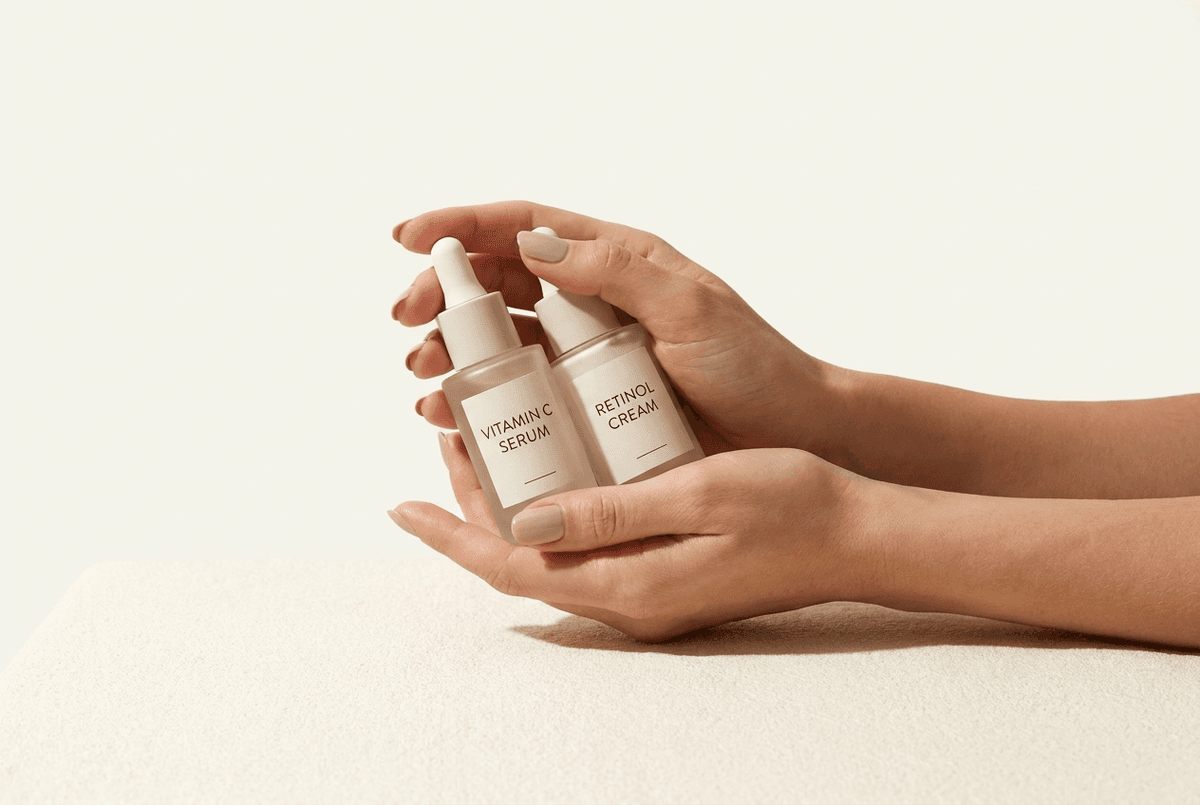
Bottom line: Yes — vitamin C and retinol can coexist in one routine. Most dermatologists recommend splitting them: vitamin C in the morning, retinol at night. The concern is stacking irritation, not a dangerous chemical reaction.
- Morning: vitamin C serum — oxidizes faster at night, pairs well with SPF for UV defense
- Night: retinol on clean skin — don't layer both in the same session while building tolerance
- New to either? Introduce them separately and wait 4+ weeks before adding the second
Key Takeaways
- Vitamin C and retinol can coexist in the same routine — the common advice is to use them at different times of day, not to avoid them altogether.
- The pH incompatibility concern (that acidic vitamin C destabilizes retinol) has been largely overstated; the real risk is skin irritation from combining two actives.
- Vitamin C is generally used in the morning (where it also provides antioxidant protection against UV-generated free radicals); retinol is used at night.
- Beginners should introduce each ingredient separately and allow 4–6 weeks for skin to adjust before adding the second.
- Stabilized vitamin C derivatives (ascorbyl glucoside, ethyl ascorbic acid) are gentler alternatives to L-ascorbic acid and may reduce the risk of irritation.
- Signs of over-activing — persistent stinging, flaking, or new breakouts — mean it is time to simplify the routine, not push through.
Key Terms
Vitamin C (L-ascorbic acid)
L-ascorbic acid is the most studied and bioavailable form of vitamin C used in skincare. It is an antioxidant that may help brighten uneven skin tone, support collagen synthesis, and protect against free radical damage. It matters here because it is highly pH-sensitive — it is most stable and effective at a low pH (around 3.5), which is more acidic than many other skincare products.
Retinol
Retinol is an over-the-counter retinoid (vitamin A derivative) that converts to retinoic acid in the skin. It is commonly used to support cell turnover, reduce the appearance of fine lines, and improve skin texture over time. It matters here because retinol is also a potent active that causes dryness and irritation during the adjustment period, especially for beginners.
Over-activing
Over-activing is the informal term for using too many potent skincare actives (acids, retinoids, vitamin C) too frequently or simultaneously, resulting in barrier damage. It matters here because it is one of the most common causes of irritation, breakouts, and sensitivity in people with otherwise healthy skin who are following well-intentioned routines.
Where the "Don't Mix Them" Idea Comes From
The concern about combining vitamin C and retinol became widespread in skincare communities around 2015–2018, largely driven by two arguments:
- 1.
pH incompatibility. L-ascorbic acid is most effective at a low pH (~3.5). Retinol formulations typically sit at a higher pH (around 5–7). The argument was that applying both would raise the pH of the vitamin C environment, reducing its effectiveness or destabilizing the retinol.
- 2.
Oxidation concerns. Vitamin C, especially L-ascorbic acid, oxidizes quickly when exposed to light, air, and certain environments. Some argued that combining it with retinol accelerated this oxidation.
These concerns are not entirely without basis, but they are more nuanced than the blanket "never combine them" rule that circulated widely.
What the Evidence Actually Suggests
The pH incompatibility argument has been questioned by cosmetic chemists. The skin's own pH buffering means that a product applied at pH 3.5 does not maintain that exact pH once it contacts skin — the environment normalizes relatively quickly. A 2016 paper published in the Journal of Drugs in Dermatology examining retinol and vitamin C combinations found no evidence that the combination was chemically unsafe.
The more legitimate concern — and the one that holds up in practice — is combined irritation. Both L-ascorbic acid and retinol are potent actives. Using both in the same application step increases the likelihood of stinging, redness, peeling, and barrier disruption, particularly for people who are new to either ingredient or have reactive skin.
This is why the standard recommendation is not "never use both" but "use them at different times" — an approach that sidesteps both the theoretical pH concern and the practical irritation risk.
The AM/PM Split: Why It Works
Using vitamin C in the morning and retinol at night is not just a workaround — it is arguably the optimal way to use both:
Morning vitamin C provides antioxidant defense during the day. UV radiation generates free radicals that can degrade sunscreen and damage skin cells. Vitamin C applied under SPF may help neutralize some of this oxidative stress. Make sure sunscreen is the last step before leaving the house — and applied at the correct amount for your face.
Nighttime retinol avoids sun exposure, which can degrade retinol and increase photosensitivity. The skin's cell turnover also peaks at night, which may make this a more effective window for retinoid use.
This split is the approach recommended by most dermatologists and cosmetic chemists as of 2026. See How to Layer Skincare Products for a full guide to product application order in AM and PM routines.
If You Want to Use Both in the Same Routine
For experienced users with tolerant skin, using both in the same PM routine is possible. Two commonly cited approaches:
- 1.
The wait method
Apply vitamin C serum, wait 20–30 minutes for it to absorb and pH to normalize, then apply retinol. This reduces the theoretical pH interference and gives each product time to work.
- 2.
The moisturizer buffer
Apply vitamin C, follow with a moisturizer, then apply retinol on top. The moisturizer acts as a physical buffer that dilutes the contact between the two actives and reduces irritation risk. This is also a common beginner technique for starting retinol with less irritation.
Neither approach is necessary if you use the AM/PM split. Both are workarounds for users who prefer a single-routine approach or who have specific reasons to use both products at night.
Signs You Are Over-Activing
Barrier damage from over-activing often looks like sensitivity that did not exist before. Common indicators:
- Stinging or burning after applying products that previously did not cause any reaction
- Redness or flushing that lasts more than 30 minutes after application
- Flaking or peeling that a moisturizer does not resolve within 24–48 hours
- New breakouts or small pustules in areas not usually prone to acne
- Skin that feels tight, thin, or unusually reactive to water temperature
If you recognize these signs, the standard recommendation is to pause all actives for 1–2 weeks and return to a simple routine: a gentle cleanser, a fragrance-free moisturizer, and SPF in the morning. Reintroduce one active at a time once the barrier has had time to recover. See Retinol for Beginners for a structured approach to introducing retinol without irritation.
Frequently Asked Questions
Next Steps
New to retinol? Retinol for Beginners: How to Start Without Irritation covers frequency, concentrations, and how to build tolerance step by step.
Deciding between retinol and retinal? Retinol vs. Retinal: How to Choose compares potency, irritation profiles, and who each form suits best.
Want the full picture on layering actives? How to Layer Skincare Products explains application order for AM and PM routines, including how to fit serums and treatments in.
Building a routine from scratch? How to Build a Skincare Routine covers the essentials before adding actives like vitamin C or retinol.
Conclusion
Vitamin C and retinol can be part of the same routine — the key is not to use them simultaneously. The AM/PM split (vitamin C in the morning, retinol at night) is the simplest, lowest-risk approach and the one most commonly recommended by dermatologists. If you are still introducing either ingredient, build tolerance with one before adding the second. The goal is a routine your skin can handle consistently over weeks and months, not one that packs in every effective ingredient at once.
Keep Reading
Beginner Retinol Serums That Won't Wreck Your Barrier
The barrier damage beginners blame on retinol is mostly avoidable. Pick a starter retinol serum by delivery system and barrier support — not percentage.

How Long Retinol Really Takes (Week-by-Week Reality Check)
How long does retinol take? Texture shifts in weeks, fine lines need about 3 months, and pigment takes roughly 6 — here's the real week-by-week timeline.
The Niacinamide Serums Worth Buying (and the Overpriced Ones to Skip)
The best niacinamide serum for most people costs under $10 — the clinical evidence tops out at 5%, not 10%. Here's what's worth buying and which to skip.