Beginner Retinol Serums That Won't Wreck Your Barrier
I bought all six, used them, and then read every ingredient list line by line. Two of them are not the products I thought I was recommending — including one of my own picks.
Opinion · Updated September 2026 · 12 min read
By Sofia De Laurentiis, Device Index Editor
Quick Answer
Bottom line: This is an opinion piece: I used all six of these serums and then checked every ingredient list against what the brand implies. My conclusion held — delivery system and barrier support beat percentage for a beginner — but two products moved. RoC is better than its marketing suggests: eight ingredients, one of them ceramide NP. Naturium is worse: 37 ingredients and not one of them is niacinamide, a ceramide or squalane. CeraVe is still what I would hand a first-timer, pilling and all.
- Still my pick: CeraVe Resurfacing Retinol Serum — encapsulated retinol with niacinamide, three ceramides and hyaluronic acid. It pills if you rush it; that is a technique problem, not a formula problem.
- Biggest correction: Naturium Retinaldehyde 0.05% has no niacinamide, no ceramides and no squalane. Good retinoid, thinner barrier support than the category positioning implies.
- Read past 'fragrance-free': The Ordinary hides rosemary and tomato extract in an eight-ingredient formula, and La Roche-Posay lists alcohol denat. fourth.
- Across all six products, the most common thing users praise is that the serum did not irritate them — not that they saw results. That holds at every price point here.
Affiliate Disclosure: As an Amazon Associate I earn from qualifying purchases. This means we may earn a small commission if you purchase through our links, at no extra cost to you. This helps us continue creating helpful content.
Comparison at a glance
The two columns that should drive your choice are delivery and barrier support. Percentage is the column people read first and the one that predicts the least. The barrier column below is now built from each product's published ingredient list rather than from its positioning, which is why two rows read differently than they used to.
| Product | Retinoid & disclosed % | Delivery | Barrier support | Fragrance-free | Price |
|---|---|---|---|---|---|
| CeraVe Resurfacing Retinol Serum | Retinol · not disclosed | Encapsulated | Niacinamide + 3 ceramides + HA | Yes | Check price |
| The Ordinary Retinol 0.2% in Squalane | Retinol · 0.2% | Plain (squalane base) | Squalane + jojoba only | No parfum, but rosemary + tomato | Check price |
| RoC Retinol Correxion Night Serum Capsules | Retinol · not disclosed | Encapsulated capsules | Ceramide NP + emollients | Yes | Check price |
| The INKEY List Starter Dual Retinol Serum | Encapsulated retinoid + 0.01% retinal | Encapsulated, slow-release | Glycerin + squalane + bisabolol | Yes | Check price |
| Naturium Retinaldehyde Cream Serum 0.05% | Retinaldehyde · 0.05% | Stabilized, opaque packaging | Glycerin + emollient esters (no niacinamide, no ceramides) | Yes | Check price |
| La Roche-Posay Retinol B3 Serum | Retinol + retinyl palmitate · not disclosed | Stabilized | Niacinamide + HA (contains fragrance) | No | Check price |
Prices come live from Amazon and refresh with each build. Where a row reads "Check price," the live figure was unavailable at build time — the current price is on Amazon.
Most "best retinol" lists rank products by strength. I think that is the wrong first question for a beginner, and I still think so after using all six of these. What decides whether you stay on retinol long enough to see anything is not the percentage on the label — it is whether the formula keeps your barrier intact while the retinoid does its slow work underneath.
What changed is my read on two specific bottles. I wrote the first version of this list from formulas and studies. Then I used the products for a few months, and afterwards I sat down and read every INCI list end to end. Two of them did not say what I assumed they said. I have left the original reasoning visible below rather than quietly rewriting it, because the correction is the most useful thing on this page.
The dryness, flaking and stinging that make people quit in week two are not proof that retinol is working. They are a predictable, dose-dependent irritation reaction called retinization — and it is largely avoidable with the right formula and a slow ramp. This guide picks starter serums on Amazon by the things that actually protect your barrier: how the retinol is delivered, and what is in the bottle alongside it. If you want the full routine mechanics first, start with our guide to starting retinol without irritation.
How to choose a beginner retinol (the 90-second version)
You are looking for a formula that lowers the peak dose your skin absorbs at once, and that repairs the barrier in the same step. In practice, that means five things.
Delivery system
Encapsulated or time-release retinol releases the active gradually instead of all at once, which lowers the irritation spike. In one double-blind human study, controlled-release retinol particles were 12–23% less irritating than a standard formulation at a matched dose — and the retinol stayed stable far longer. Encapsulated beats plain.
Barrier co-ingredients
Niacinamide supports ceramide production and calms inflammation, which is why formulas that pair it with retinol tend to be better tolerated — the mechanism is covered in our guide to what niacinamide does. Ceramides plus cholesterol and fatty acids replace the lipid mortar that fast cell turnover temporarily depletes. Humectants and emollients — glycerin, hyaluronic acid, squalane, panthenol — offset the dryness.
A low starting point
Retinoids sit on a ladder: retinyl esters (gentlest), then retinol, then retinaldehyde, then prescription tretinoin (strongest). Each step up is more effective and more irritating, which is the whole subject of our retinol vs retinal comparison. A beginner wants a low retinol percentage, or a low-percentage retinaldehyde around 0.05% — not a maxed-out 1%.
Honest labeling
Some brands disclose their percentage, which is useful for stepping up your dose over time; some do not. Neither is disqualifying, but disclosure is a real convenience for beginners.
Fragrance-free, sensible packaging
Fragrance is a common irritant you do not need in a barrier-focused product, and retinol degrades in light and air — opaque, air-tight packaging keeps it working.
How I picked — and what I got wrong
Every serum here was selected against the five criteria above, in that order of weight: delivery system first, barrier co-ingredients second, dose third, then labeling and packaging. A product that scores well on delivery and barrier support beat a product with a bigger number on the front of the bottle every time. I still stand behind that ranking.
What I did not do carefully enough the first time was verify the second criterion product by product. Barrier support is the thing I weighted second-heaviest, and I took two formulas at their positioning instead of at their ingredient list. Reading all six lists end to end changed two entries:
- Naturium moved down. Its 37-ingredient list contains no niacinamide, no ceramide and no squalane. It is a well-stabilized retinaldehyde in a pleasant, glycerin-and-ester base — but on my own second criterion it is one of the weaker entries here, not one of the stronger ones. That is a correction to what this page used to claim.
- RoC moved up. Eight ingredients, and one of them is ceramide NP. There is no hyaluronic acid in it, which this page previously said there was. A short list with an actual barrier lipid in it is a better buy than a long list of pleasant texture agents.
We limited the list to over-the-counter serums that are stocked on Amazon, because a starter retinol you cannot reliably reorder is not much use. Prescription tretinoin sits outside this guide by design — it is a conversation with a clinician, not a shopping decision. High-strength retinol (1%) and high-percentage direct retinoids were excluded as starting points for the same reason they are excluded from the picks: they front-load the irritation this guide exists to help you avoid.
Each pick carries an honest caveat and, where I have one, my own experience of using it. I bought every product here myself. I am not sent products, nothing on this page is a paid placement, and the ingredient claims come from the current published INCI lists rather than from marketing copy. Prices, stock status and product images update automatically from Amazon rather than being written into the article, so what you see on each card is current at the time the page was last built — not a number I typed once and forgot.
What each one was actually like
Six starter serums, ordered from the most complete barrier support to the one with the biggest catch. Every entry has three parts: what the formula does, what happened when I used it, and the caveat I would want told to me before I paid for it.
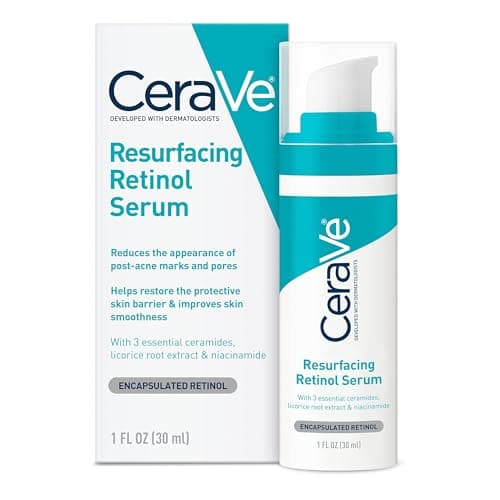
CeraVe Resurfacing Retinol Serum
CeraVe Resurfacing Retinol Face Serum with Niacinamide
Encapsulated retinol plus niacinamide, three ceramides, and hyaluronic acid — the most barrier support in one bottle.
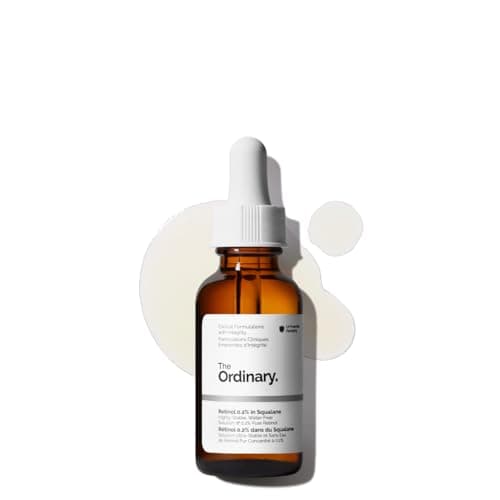
The Ordinary Retinol 0.2% in Squalane
The Ordinary Retinol 0.2% in Squalane
The cheapest bottle that tells you its dose — and the only one here that hides two botanical extracts in an otherwise bare formula.
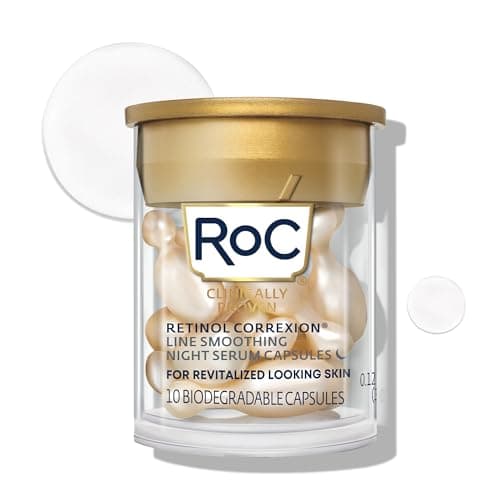
RoC Retinol Correxion Night Serum Capsules
RoC Retinol Correxion Line Smoothing Night Serum Capsules
Eight ingredients, one of them ceramide NP, sealed one dose at a time — the shortest honest formula on this list.
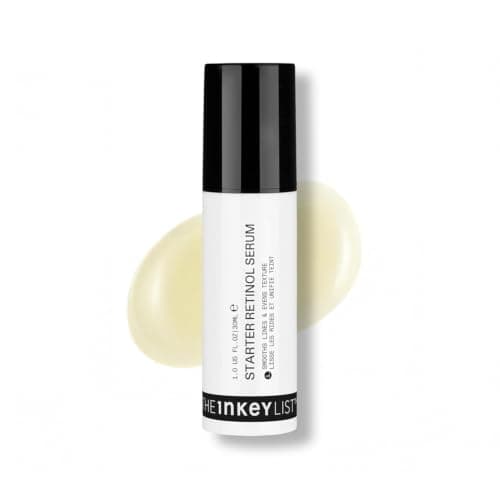
The INKEY List Starter Dual Retinol Serum
The INKEY List Starter Dual Retinol Serum
Built for first-timers: an encapsulated dual-retinoid system at a deliberately tiny dose, in a cushioning base.
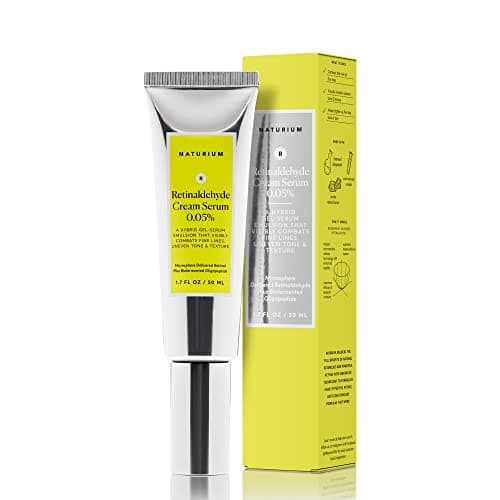
Naturium Retinaldehyde Cream Serum 0.05%
Naturium Retinaldehyde Cream Serum 0.05%
The faster retinoid at a beginner dose, in the creamiest base here — and a 37-ingredient formula that is doing less barrier work than it looks like.
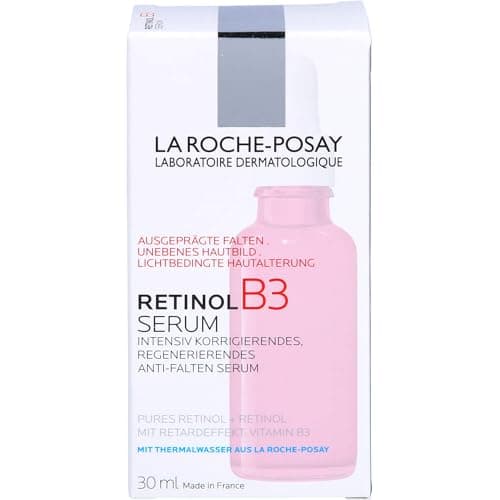
La Roche-Posay Retinol B3 Serum
La Roche-Posay Pure Retinol Face Serum with Vitamin B3
The one I liked using most and recommend least: fragranced, with denatured alcohol fourth on the list.
CeraVe Resurfacing Retinol Serum — best overall for barrier support
Buy this if you want one bottle to do the whole job: the most barrier support here, and the one I would hand a first-timer. Just do not rush the layers.
The strongest all-around beginner formula on this list, and the one I would still hand a first-timer. It pairs encapsulated (time-release) retinol with niacinamide, three essential ceramides and hyaluronic acid, so it actively rebuilds the barrier rather than just diluting the active. Fragrance-free and non-comedogenic.
Using it: the texture is light and it sinks in fast with no tacky film, which after six weeks of nightly use is the thing I noticed most. Irritation was minimal — the lowest of the six for me, which is what you would expect from encapsulated retinol sitting next to three ceramides.
The complaint everyone has: it pills. Little grey rolls, especially under makeup or when you put it over something that has not finished absorbing. It is the single most common thing people report about this serum, and it happened to me. It is also fixable: less product, and wait for the layer underneath to dry properly before the next one goes on. That solved it for me completely. I am flagging it anyway, because "use less and wait" is advice you only find after you have already had it ball up under your foundation once.
What other people report: pilling is the most repeated complaint about this serum in retailer reviews, usually under makeup or over a layer that has not finished absorbing — the same thing that happened to me. CeraVe's own replies to those reviews on the CVS review page put it down to layering too quickly or using too much product, which is the fix described above. The praise runs the other way and runs harder: minimal irritation, frequently mentioned with surprise for a retinol, and a light texture that absorbs fast enough that one pump covers the whole face. A second, smaller complaint is the pump itself failing. This is the largest review pool of the six by a wide margin — tens of thousands of ratings — so the pattern is about as solid as retailer reviews get.
Honest caveat: CeraVe does not disclose the retinol percentage, so you cannot precisely dose-step as your skin builds tolerance. For most first-timers the barrier support matters more than the exact number.
The Ordinary Retinol 0.2% in Squalane — cheapest transparent option
Buy this if price and a known dose matter most — as long as you bring your own ceramide moisturiser and you are fine with rosemary and tomato extract.
The best price on this page by a wide margin, and the most transparent about dose: a disclosed 0.2% pure retinol in a water-free squalane base, with 0.5% and 1% versions available so you can climb deliberately later. It is the serum that gets named as a first retinol by dermatologists and in almost every round-up going — Allure, Byrdie and Cosmopolitan have all put it on that list. That consensus is not wrong.
Using it: it is oily. Squalane and jojoba in a water-free base behave like an oil because that is what they are, so it sits on the skin longer than the others and it is the one I liked least at night under a moisturizer.
What I did not expect: this eight-ingredient formula contains tomato fruit extract and rosemary leaf extract. Both are antioxidants and both are botanicals — and rosemary leaf extract in particular is a recognised contact sensitiser for a minority of people. There is no parfum on the list, so a fragrance-free scan waves this bottle straight through. If you came to this list because your skin reacts to things, that is worth knowing before you buy the cheapest option in the room.
What other people report: the price dominates the Amazon reviews — real retinol for around $8 — followed by the disclosed dose, which lets people step up to 0.5% and 1% deliberately. It is also the serum most often named as a first retinol in editorial round-ups, Allure, Byrdie and Cosmopolitan among them. The oily texture divides people sharply, which matches how I found it, and the negative reviews cluster on irritation and purging. Worth saying plainly: those reviews identify no cause, and nothing in them connects the irritation to the rosemary or tomato extract. The botanicals are a reason to read the list before you buy, not an explanation for someone else's reaction.
Honest caveat: squalane and jojoba are the only barrier support here — no niacinamide, no ceramides — so you are doing more of that work yourself. Pair it with a good ceramide moisturizer and it is still an excellent, low-cost entry. Skip their higher-strength Granactive 5% as a starting point.
RoC Retinol Correxion Night Serum Capsules — the drugstore workhorse
Buy this if you want the shortest formula on the page with a real barrier lipid in it, and you do not mind a fixed dose you cannot dial down.
A decades-old drugstore line built on encapsulated retinol, with one of the longest tolerability track records in the category. The single-dose capsules are the packaging answer to retinol degrading in light and air: each dose is sealed until the night you use it.
The correction I owe this product: the published list is eight ingredients long — cyclopentasiloxane, ethylhexyl cocoate, dimethiconol, soybean oil, retinol, dimethylmethoxy chromanol, ceramide NP, phenoxyethanol. Ceramide NP is a real barrier lipid, and an earlier version of this page credited this serum with hyaluronic acid it does not contain and left the ceramide out. RoC discloses no percentage for it, so I am not going to put a number on how much is in there — but a short formula with a genuine ceramide in it deserves better than the "plus emollients" line I originally gave it.
Using it: one capsule is almost exactly enough for face and neck, it absorbs quickly, and the texture is thick — noticeably heavier than the CeraVe. The capsules are also genuinely annoying to twist open with wet or slippery hands, which is a small thing that becomes a nightly thing.
What other people report: the dominant praise in the Amazon reviews is the thing I did not expect either — one capsule holds enough for face and neck, and reviewers say so repeatedly, with surprise, having assumed it would fall short. Others point to the freshness of a sealed dose, to it not drying them out, and to multi-year use with results that held. The complaints match mine almost exactly: capsules that are hard to twist open with damp hands, and a thick texture. There are also isolated reports of capsules arriving past their date.
Honest caveat: the percentage is undisclosed, and a fixed capsule dose gives you no way to use less on a night your skin feels fragile — you ration by frequency instead.
The INKEY List Starter Dual Retinol Serum — gentlest ramp for the anxious
Buy this if retinol has gone badly for you before: the most cushioned start available over the counter, if you can live with the smell and the packaging.
Built specifically for first-timers and people who have had a bad retinol experience before. It uses an encapsulated dual-retinoid system — a granactive retinoid plus 0.01% retinal — so both the dose and the release rate are deliberately gentle, in a base of glycerin, squalane, phospholipids and bisabolol. On tolerance it delivered: it was the most comfortable of the six on my skin, and if you have had a retinol go badly before, this is the one I would start you on.
Two real gripes. The smell is strong and slightly medicinal, which is a strange thing to find in a product sold on being gentle. And the packaging is poor: the fluid is very thin and comes out fast, so you overshoot, and the screw cap gets gummy within a couple of weeks.
Worth flagging: the soothing complex here is SymRelief 100 at 0.2%, which is bisabolol — the calming compound associated with chamomile — blended with ginger root extract. Both are botanicals. They are in the formula precisely to reduce irritation, and for me they clearly worked. But if you are building a routine around avoiding plant extracts because your skin is reactive, you should know they are in the bottle rather than find out from the INCI list afterwards.
What other people report: tolerance is the headline in the Amazon reviews, specifically among people who had a bad time with retinol before — several describe a month or two with no discomfort at all. The price comes up often, as does more luminosity and smoother texture across congested areas. The two complaints are the two I had: a strong smell, which remains a strange thing to find in a product sold on gentleness, and packaging that runs too thin and too fast, with a cap that gets gummy. One reviewer reports an increase in closed comedones — I did not see that, and one account is not a pattern.
Honest caveat: at that dose you are trading speed for comfort. If your main worry is irritation, that is the right trade; if you have already tolerated retinol elsewhere, this will feel slow.
Naturium Retinaldehyde 0.05% — for the efficient step up
Buy this only once you have tolerated a starter retinol for a few months — a good retinal in a rich base, with none of the barrier support the category implies.
Retinaldehyde is one conversion step from active retinoic acid, so it is more efficient than retinol while still being gentler than prescription strength — and 0.05% is a beginner-appropriate dose. Naturium keeps it fragrance-free and ships it in opaque air-tight packaging that keeps the retinal stable, which matters more for retinal than for retinol. On my skin it did not irritate, which is genuinely impressive for a retinaldehyde.
Where I was wrong about it: I had this serum on the list for its barrier support. Its published ingredient list runs to 37 entries — by far the longest here, against eight for RoC and eight for The Ordinary — and not one of those 37 is niacinamide, a ceramide or squalane. The base is glycerin, propanediol, triheptanoin, alkanes, esters and yeast extracts: pleasant, well-built emollient texture, but not the lipid-replacement story this page previously told about it. The retinoid is still good. The reason I ranked it is not.
Using it: it is the creamiest of the six and can feel tacky before it settles, noticeably so in humid weather. If your skin runs oily you will probably find it heavy.
What other people report: the dominant praise in the Amazon reviews is that it does not irritate, even as someone's first retinoid — the same thing I found, and genuinely notable for a retinaldehyde. Reviewers also like how easily it layers and call the price fair for a retinal. The complaints track mine: tacky before it absorbs, worse in humid weather, heavy on oily skin, with some sensitive skins reacting anyway. Two caveats. This product has by far the smallest pool of reviews of the six, so the pattern is thin — treat it as a hint, not a finding. And notice what those reviews are not telling you: "it did not irritate me" is a statement about tolerance, not about barrier support. This formula is well tolerated and still contains no niacinamide, no ceramide and no squalane. Reviews only answer the first question.
Honest caveat: it is a step up in both efficiency and cost, and Naturium sells 0.10% and 0.15% versions that are explicitly not where a beginner should start. The same goes for high-strength pure retinol at 1% and high-percentage direct retinoids: build tolerance for 12 or more weeks on one of the picks above, then step up a single rung. Our week-by-week retinol timeline covers what to expect before you decide you are ready.
La Roche-Posay Retinol B3 Serum — popular, with one catch
The nicest one to use, and the one I would skip for reactive skin: fragranced, with alcohol denat. fourth on the list.
A well-known, widely recommended option that combines pure retinol and retinyl palmitate with niacinamide and sodium hyaluronate. It earns its reputation on feel: the texture is the best-judged of the six, neither watery nor greasy, and unlike other retinoids I have used it did not dry me out at all. This is the one I most enjoyed applying.
And it smells. I bought it assuming it would be unscented, because that is what I expect from this brand. It is not: parfum is on the list. La Roche-Posay's own position is that its anti-ageing ranges are fragranced and that the products are "hypoallergenic" because they avoid the standard fragrance-mix allergens. That is a real distinction, and it is also not the same claim as fragrance-free. If you picked this brand because you assumed no fragrance, check the box.
What other people report: the dominant complaint in the Amazon reviews is the fragrance, and it comes from people who bought it assuming a La Roche-Posay product would not have any. A second pattern is more striking: several people who react to tretinoin tolerate this one without trouble. On texture, reviewers land where I did — neither watery nor heavy.
And then the one that complicates my own argument. The single most common piece of praise is that it does not dry the skin out, said in explicit contrast to other retinols people had tried. That is my experience too. It also sits directly across from the objection I am about to make: alcohol denat. is the fourth ingredient in this formula, and neither I nor the weight of the reviews found it drying. An ingredient list tells you what a formula could do to skin. It does not settle what it does to yours. I would still not pick this one for reactive skin — but I am not going to pretend the evidence for that objection is anyone's actual face.
Honest caveat: the bigger issue for a barrier-focused reader is not the parfum at the end of the list, it is the alcohol denat. in fourth position — that is high, and it is a drying solvent in a product many people buy for sensitive skin. The percentage is also undisclosed. Worth knowing about; not my pick for reactive skin, and I say that as the person who liked using it most.
What the reviews agree on
Put the six sets of reviews side by side and one thing jumps out. In every single case — all six products, no exceptions — the number one thing users praise is that it did not irritate them. Not that they saw results. Not fewer lines, not clearer marks. That they were able to keep using it. That holds for the $8 bottle and it holds for the $45 one.
That is thousands of people, across six products, independently converging on the same criterion this article ranked on. It is also, in a useful way, a little bleak. People are not judging a beginner retinol by what it does. They are judging it by whether they got to stay on it — which is the only route to it doing anything at all, since results need eight to twelve weeks of consistent use and irritation is what ends the run long before then.
One caution about reading too much into it. It did not irritate me is the easiest thing to notice in the first month; results are the hardest. Some of this pattern is real signal about tolerability, and some of it is simply the only thing a review written six weeks in is in a position to say.
How to start without wrecking your barrier
Buying the right serum is half of it. The ramp is the other half, and it is where most beginners lose the plot.
- 1.
Go slow on frequency. Start twice a week at night. After two weeks with no trouble, move to every other night. Only go nightly once your skin is comfortable — this can take a couple of months, and that is normal. Flaking is not proof it is working: genuine irritation is a cue to drop back a step in frequency, not to push through it — purging versus a regular breakout covers how to tell which one you are looking at.
- 2.
Buffer it. Apply your moisturizer first, wait a few minutes, then the retinol — the "sandwich" method. This slows penetration and reduces irritation without meaningfully cutting results.
- 3.
Support the barrier. Use a ceramide-containing moisturizer alongside, and expect the first several weeks to include some adjustment. A niacinamide serum in the same routine is one of the better-supported ways to make retinol more tolerable. Keep that moisturizer in the routine from night one rather than adding it once trouble starts, and hold off on strong exfoliating acids entirely while you are still ramping up — one new active at a time is the only way to know what your skin is reacting to.
- 4.
Sunscreen is non-negotiable. Retinoids increase sun sensitivity. Daily broad-spectrum SPF is not optional while you are using one, and how much you apply decides whether you get the protection on the label.
- 5.
Give it 8 to 12 weeks before you judge it. Texture tends to shift first; fine lines and pigment take considerably longer. Deciding a serum has failed at week three is the most common way people end up back at the start with a drawer full of half-used bottles.
Which one for your situation
If
Your skin is reactive, or a previous retinol went badly
The INKEY List Starter Dual Retinol Serum
Because: An encapsulated dual-retinoid system at a very low dose is the most cushioned introduction available over the counter.
If
You want the most barrier support in a single bottle
CeraVe Resurfacing Retinol Serum
Because: Encapsulated retinol with niacinamide, three ceramides and hyaluronic acid rebuilds the barrier while the retinoid works.
If
You want to spend as little as possible and know your exact dose
The Ordinary Retinol 0.2% in Squalane
Because: A disclosed 0.2% in squalane is the cheapest transparent entry — as long as you pair it with a ceramide moisturizer and you are fine with rosemary and tomato extract.
If
You have tolerated a starter retinol for a few months and want more
Naturium Retinaldehyde 0.05%
Because: Retinaldehyde is one conversion step from active, so it works more efficiently than retinol at a still beginner-appropriate dose. Bring your own barrier support — this formula has none.
Frequently Asked Questions
Retinol or retinaldehyde for a beginner?
Either works. Retinol is the most-studied and most widely available starting point. Retinaldehyde is one conversion step closer to active retinoic acid, so it can work a little faster while still being gentler than prescription strength — a good option at a low percentage like 0.05% if you want efficiency. What matters more than the choice between the two is the delivery system and the barrier ingredients alongside it.
How long until I see results from a beginner retinol serum?
Give a beginner retinol serum 8 to 12 weeks of consistent use. Early on you may go through an adjustment phase of dryness and mild flaking, called retinization, which typically settles as your skin adapts over the first couple of months. Results build gradually: texture tends to shift first, with fine lines and pigment taking considerably longer. Consistency beats intensity.
Can I use retinol with vitamin C or exfoliating acids?
You can, but not necessarily in the same routine when you are starting out. Introduce one active at a time so you can tell what your skin is reacting to. Many people use vitamin C in the morning and retinol at night, and hold off on strong exfoliating acids until their retinol tolerance is established.
Should I use retinol every night from day one?
No. Start twice a week at night and build up over several weeks. Starting nightly is the fastest way to trigger the irritation that makes people quit in week two. Move to every other night once two weeks pass without trouble, and go nightly only when your skin is comfortable — which can take a couple of months.
Do retinol and niacinamide cancel each other out?
They do not. Niacinamide is one of the best-supported ways to make retinol more tolerable: it increases ceramide synthesis in the stratum corneum and calms inflammation. The two are routinely formulated together — CeraVe and La Roche-Posay both do it in the serums reviewed above. Worth noting that Naturium, which is often assumed to be in that group, does not: there is no niacinamide anywhere in its 37-ingredient list.
Do you have to purge and break out for retinol to work?
No. The real early-weeks reaction is retinization — irritation from accelerated turnover — and it is dose-dependent, not a measure of efficacy. There is no good evidence that your skin must break out for retinol to deliver results. If you are getting genuine irritation, that is a cue to slow down rather than push harder.
Does a higher percentage mean better results?
For a beginner, a higher percentage mostly means more irritation and a higher chance you quit before results show. Delivery system and barrier support beat raw concentration in the first few months, which is the only stretch where most people give up.
Is retinol safe during pregnancy or breastfeeding?
Topical retinoids are generally advised against during pregnancy, and the American College of Obstetricians and Gynecologists advises avoiding retinoids in pregnancy, including topical ones. If you are pregnant, trying to conceive, or nursing, talk to your doctor before using any retinoid product.
Final Thoughts
The retinol market sells strength because strength is easy to print on a box. What actually determines whether a beginner gets results is much less marketable: a delivery system that meters the dose out slowly, and enough barrier support in the same bottle that your skin can absorb the change. Using all six of these did not change that view. It sharpened it.
What it did change is how much I trust a category description. I had Naturium on this list for barrier support it does not have, and I had RoC marked down for a ceramide I did not notice it did. Both mistakes came from the same habit — reading what a product is positioned as instead of what is in it. Two of the six also carry irritants that a "fragrance-free" scan will not catch: rosemary extract in The Ordinary, alcohol denat. high up in the La Roche-Posay. The ingredient list is the only part of the package the brand cannot write freely, so it is the part I read first now.
Pick one serum from the list above, start at twice a week, keep a ceramide moisturizer and daily sunscreen next to it, and give it three months before you judge anything. If you get through the first eight weeks without a flare you are already ahead of most people who start retinol — and stepping up a rung later is easy. Starting over after a wrecked barrier is not.
Disclaimer: This content is for informational purposes only and is not medical advice. Individual results may vary. Always patch test new products and consult a dermatologist for specific skin concerns.
Sources
- [1]Shields CW 4th, White JP, Osta EG, et al.. Encapsulation and controlled release of retinol from silicone particles for topical delivery. J Control Release. 2018;278:37–48. (Controlled-release formulations were 12–23% less irritating in a double-blind human study; retinol half-life 9× greater.). View source
- [2]Motamedi M, Chehade A, Sanghera R, Grewal P. A Clinician's Guide to Topical Retinoids. J Cutan Med Surg. 2022;26(1):71–78. (Retinoid potency ladder; microsphere delivery minimizes irritation.). View source
- [3]Tanno O, Ota Y, Kitamura N, et al.. Nicotinamide increases biosynthesis of ceramides as well as other stratum corneum lipids to improve the epidermal permeability barrier. Br J Dermatol. 2000;143(3):524–531.. View source
- [4]Mukherjee S, Date A, Patravale V, et al.. Retinoids in the treatment of skin aging: an overview of clinical efficacy and safety. Clin Interv Aging. 2006;1(4):327–348.. View source
- [5]MotherToBaby (Organization of Teratology Information Specialists). Topical Tretinoin — fact sheet on retinoid use in pregnancy and breastfeeding.. View source
- [6]Naturium. Retinaldehyde Cream Serum 0.05% — published ingredient list (37 ingredients; no niacinamide, ceramide or squalane).. View source
- [7]INCIDecoder. RoC Retinol Correxion Line Smoothing Night Serum Capsules — ingredient list (8 ingredients, including ceramide NP).. View source
- [8]INCIDecoder. The Ordinary Retinol 0.2% in Squalane — ingredient list (includes tomato fruit extract and rosemary leaf extract).. View source
- [9]INCIDecoder. La Roche-Posay Retinol B3 Serum — ingredient list (alcohol denat. in fourth position; parfum present).. View source
- [10]The INKEY List. Starter Retinol Serum — published ingredient list and 0.2% SymRelief 100 (bisabolol plus ginger root extract).. View source
- [11]CVS Pharmacy. CeraVe Resurfacing Retinol Serum — customer reviews, including CeraVe's own replies attributing pilling to layering too quickly or applying too much product.. View source
- [12]Amazon customer reviews. CeraVe Resurfacing Retinol Serum — reader-reported praise and complaints.. View source
- [13]Amazon customer reviews. The Ordinary Retinol 0.2% in Squalane — reader-reported praise and complaints.. View source
- [14]Amazon customer reviews. RoC Retinol Correxion Night Serum Capsules — reader-reported praise and complaints.. View source
- [15]Amazon customer reviews. The INKEY List Starter Dual Retinol Serum — reader-reported praise and complaints.. View source
- [16]Amazon customer reviews. Naturium Retinaldehyde Cream Serum 0.05% — reader-reported praise and complaints. Smallest review pool of the six.. View source
- [17]Amazon customer reviews. La Roche-Posay Retinol B3 Serum — reader-reported praise and complaints.. View source
Keep Reading
How Long Retinol Really Takes (Week-by-Week Reality Check)
How long does retinol take? Texture shifts in weeks, fine lines need about 3 months, and pigment takes roughly 6 — here's the real week-by-week timeline.
The Niacinamide Serums Worth Buying (and the Overpriced Ones to Skip)
The best niacinamide serum for most people costs under $10 — the clinical evidence tops out at 5%, not 10%. Here's what's worth buying and which to skip.
Niacinamide vs Zinc: Do You Actually Need Both?
Niacinamide vs zinc: they're complementary, not competing — whether you need both depends on your skin concern, from oiliness to active inflamed acne.